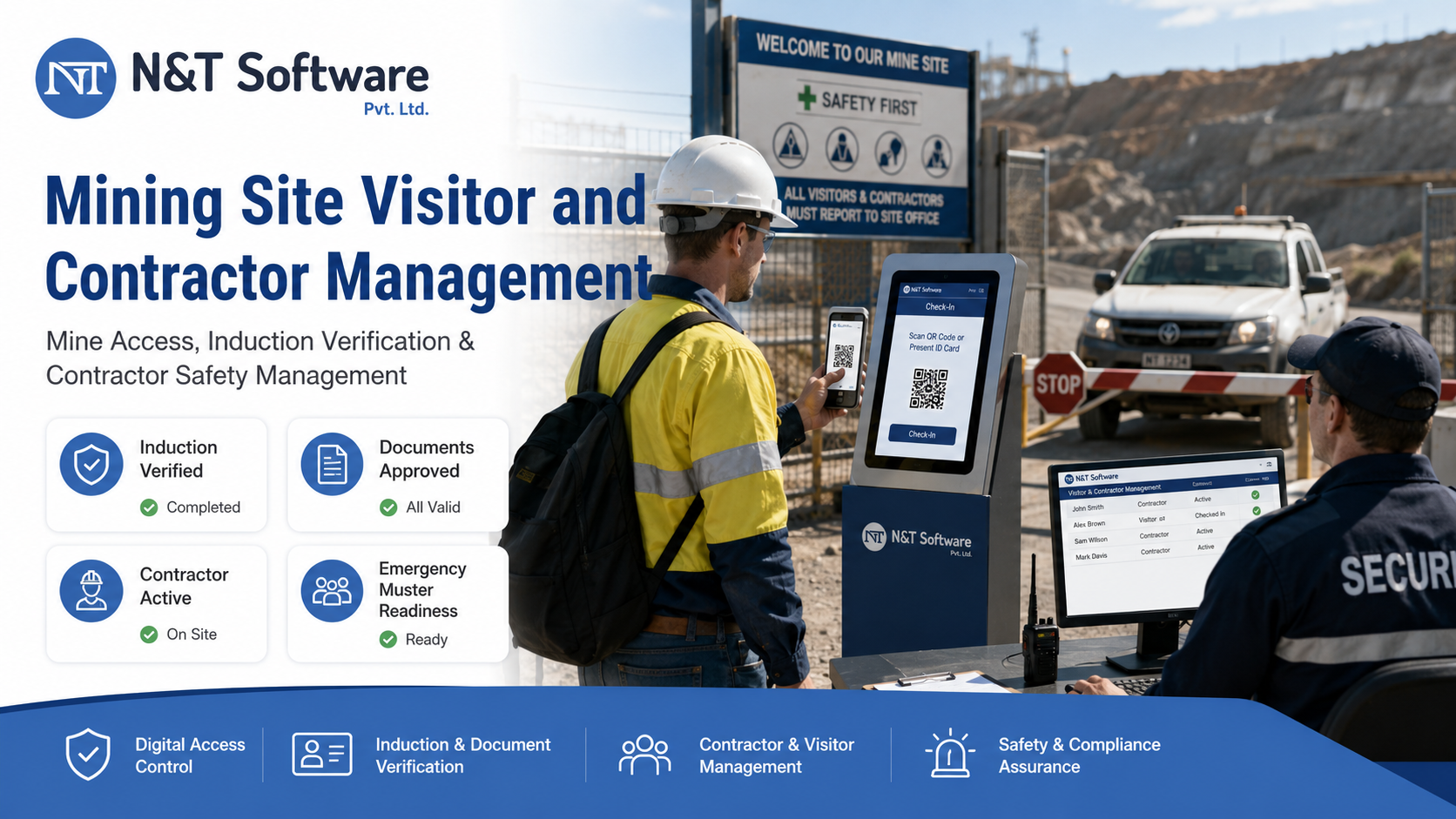
A complete 2026 guide to mining site visitor and contractor management software, covering contractor onboarding, digital inductions, compliance documents, access control, gate passes, vehicles, time onsite, emergency muster, integrations, pricing and vendor selection.
Mining operations receive far more than occasional office visitors. Exploration specialists, drilling crews, maintenance contractors, equipment suppliers, transport drivers, auditors, regulators and short-term technical teams may all need controlled access to pits, shafts, processing plants, workshops, laboratories, camps, warehouses and restricted operational zones.
A paper visitor register cannot reliably confirm whether each person has a valid induction, medical certificate, trade licence, competency, permit, insurance document, host approval or authorization for a specific mine area. A mining site visitor and contractor management system turns these checks into a structured digital gate workflow before access is granted.
This 2026 guide covers high-demand searches including mining contractor management software, mine site visitor management system, mining access control system, digital mine induction, contractor compliance software, mine gate pass system, vehicle access control, contractor time and attendance and emergency muster.
Quick Answer: What Is a Mining Site Visitor and Contractor Management System?
It is software that registers and pre-approves people entering a mine, validates required documents and training, records site induction, controls access by location and time, tracks who is onsite and supports emergency accounting. For contractors, it can also manage company prequalification, worker onboarding, licences, medicals, competency records, permits, vehicles, recurring access and compliance reporting.
N&T Software can be evaluated first by mining operators that want configurable visitor registration, QR or OTP entry, approval workflows, digital gate passes, multi-location control, live entry and exit records, reports and integration planning. Mine-specific documents, inductions, zone access, alerts and offline requirements should be confirmed through a tailored demonstration and written scope.
Why Mine Site Visitor Management Is Different
A mine is a safety-critical environment. The same person may be approved for an administration building but not for an underground area, blasting zone, processing plant, fuel storage area or heavy-equipment route. Entry can depend on employer, role, task, work order, induction, medical fitness, competency, PPE, escort, vehicle, shift, fatigue status and permit.
End-to-End Mining Contractor Access Workflow
A strong workflow begins with contractor company prequalification, followed by individual worker onboarding and document collection. The worker then completes the correct site, role and task induction before a project owner, department or authorized host approves the work.
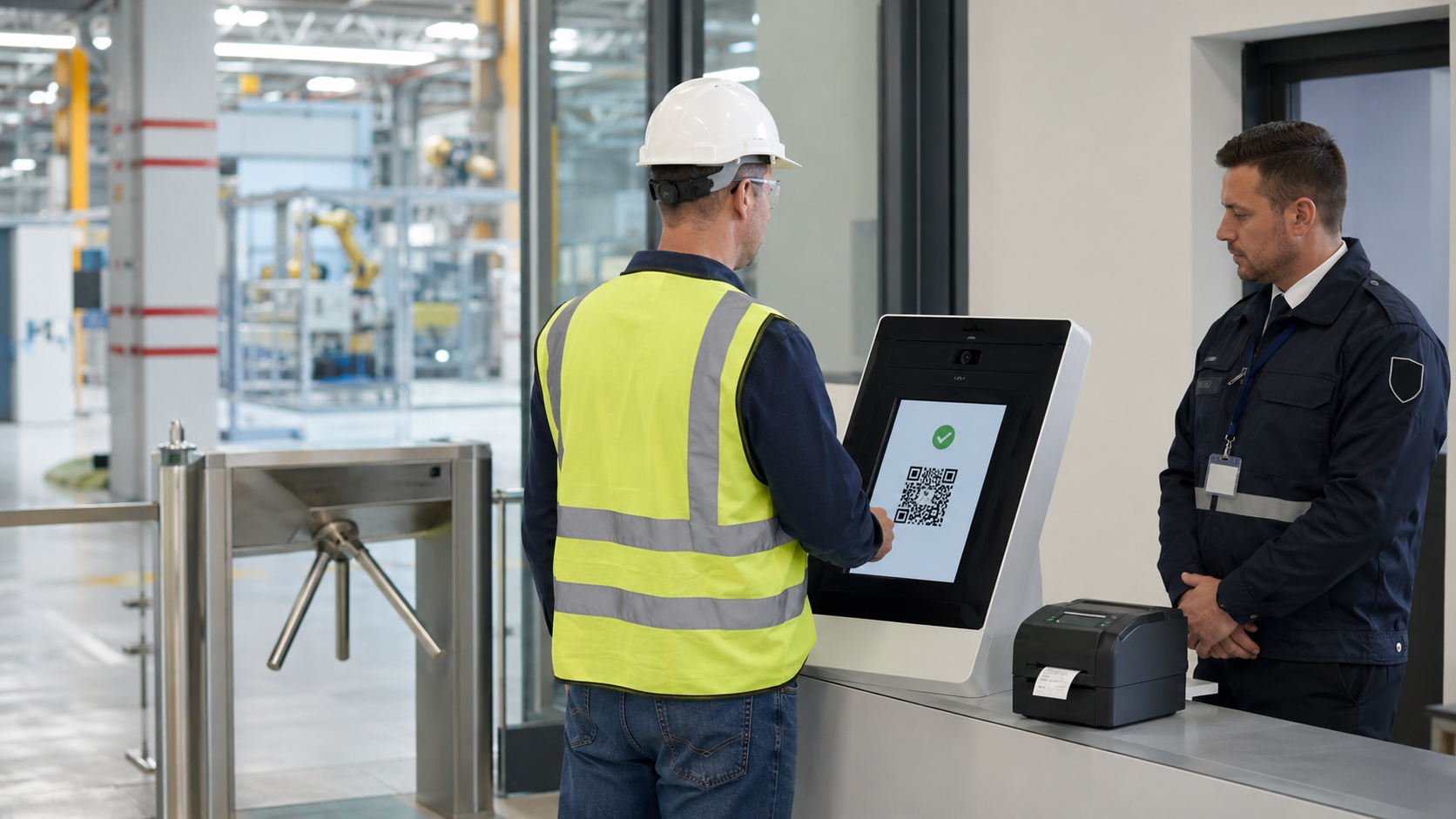
Before travel, the platform identifies missing or expiring requirements. At the gate, security verifies identity, contractor company, vehicle and current compliance using a QR code, OTP, identity document, badge or another approved method. The system then approves, holds or denies entry and issues a time-limited credential for permitted zones.
Entry, exit and checkpoint events create a live onsite record for time reporting and emergency response. When the shift, permit, project or contract ends, temporary credentials expire, returned assets are recorded and access is removed.
High-Demand Mining Contractor Management Features
Buyers commonly look for contractor company prequalification; worker onboarding; digital mine-site induction; medical, licence, ticket, competency and insurance expiry alerts; QR, OTP, badge, RFID or biometric check-in; gate-pass and access-control integration; permit-to-work workflows; vehicle and driver management; contractor time and attendance; live onsite headcount; emergency alerts; digital muster; multi-mine dashboards and audit trails.
Mine Site Induction and Hazard-Awareness Management
Mine inductions should be site- and role-specific. A visitor entering an office may need a short hazard briefing, while a maintenance contractor entering a processing plant may require detailed training, competency verification and task-specific controls.
In the United States, MSHA explains that contractors and other people entering mine property may require comprehensive training or site-specific hazard-awareness training depending on their work and exposure. Its contractor training guidance states that site-specific hazard awareness must be provided before applicable persons begin work at each mine.
MSHA also states that the production operator retains primary responsibility for ensuring necessary site-specific hazard-awareness training has been given. See the official Part 46 contractor responsibility guidance.
A digital induction module should support different content by mine, role, language, task and risk level. It should record the course version, completion date, score, acknowledgement and expiry, and it should stop an incomplete or expired induction from silently producing an active gate credential.
Contractor Documents and Expiry Controls
Mining access may depend on identity records, contractor-company approval, medical fitness, trade licences, operator tickets, competency evidence, insurance, workers’ compensation, inductions, refresher training, risk assessments, method statements, safety files, permits, vehicle documents and equipment inspections.
The platform should notify workers, contractor administrators and mine contacts before expiry. Gate staff should see a simple current, expiring, missing, rejected or held status without being exposed to unnecessary medical or confidential information.
Mining Access Control by Zone, Task and Time
A valid induction should not grant unrestricted access. Rules can be based on mine, gate, contractor, role, project, work order, shift, permit, escort requirement, vehicle type and operational risk. Temporary access should expire automatically when the approval, document, permit or contract expires.
The visitor platform may integrate with cards, turnstiles, barriers, doors and checkpoints, but the integration must be tested using the mine’s actual hardware and fallback procedure. The VMS should remain the approval source while the physical access system enforces the issued credential.
Vehicle, Driver and Delivery Management
Mine gates may process buses, light vehicles, heavy trucks, fuel deliveries, equipment transporters and supplier vehicles. A complete workflow links the driver, vehicle, passengers, contractor or supplier, delivery reference, destination, load, inspection, entry time and exit time.
Useful controls include licence and vehicle-document validation, approved routes, passenger lists, inspection checklists, weighbridge or logistics references, restricted parking, dwell-time alerts and proof of exit.
Contractor Time, Attendance and Fatigue Visibility
Gate events can provide accurate contractor attendance and time-on-site records for shift reconciliation, project reporting, payroll validation and investigations. The platform can flag unusually long onsite periods, repeated shifts, missing checkouts or access outside an approved roster.
These alerts should support, not replace, the mine’s specialist fatigue-management program. Any automatic decision must be reviewed against local law, industrial agreements and documented site procedures.
Emergency Evacuation, Digital Muster and Headcount
During a fire, geotechnical event, gas incident, blast-related emergency or other evacuation, response teams need a reliable list of employees, contractors, visitors and drivers onsite. The system should provide live headcount by site, zone, company and visitor type; send emergency messages; record safe responses; support mobile muster and identify people not yet accounted for.
Offline and Remote Mine Operation
Remote mines may have intermittent internet, long distances between gates and operational areas and limited mobile coverage. Buyers should test what happens when connectivity, a kiosk, badge printer or integration is unavailable.
A controlled fallback can include cached expected-visitor data, locally available induction status, audited manual approval, queued synchronization, offline emergency lists and mandatory reconciliation after service returns. An outage must not create permanent access that bypasses later review.
Privacy, Cybersecurity and Data Governance
Mining contractor systems can contain identity, medical-status, qualification, vehicle, access-history and incident data. Apply role-based access, encryption, strong administrator authentication, audit logs, defined retention periods, controlled exports and correction or deletion processes where applicable.
Best Mining Visitor and Contractor Management Software to Evaluate
The following platforms illustrate different approaches currently marketed for mine-site access, contractors and workforce compliance. This is not a universal ranking. Test each product against your mines, contractor documents, induction rules, access-control equipment, connectivity and legal requirements.
1. N&T Software Visitor Management System
N&T Software can be evaluated for configurable registration, approvals, QR or OTP entry, digital gate passes, multi-location management, live in-out records, reports and integrations. Review the N&T Visitor Management Software platform and request a mine-specific demonstration covering contractor onboarding, induction status, document expiry, vehicles, gate holds, zone access and emergency reporting.
N&T appears first because this guide is published on the N&T website. Selection should still follow a live demonstration, technical validation, privacy review, pilot and written scope.
2. Rapid Global
Rapid Global’s current visitor management page describes QR, app, kiosk and camera-based sign-in, compliance checks for people and vehicles, customized inductions, onsite visibility and evacuation messaging. Its broader platform includes contractor management and online inductions.
3. Sine by Honeywell
Sine currently presents an integrated visitor and contractor platform with pre-registration, check-in, onboarding, permits, certifications, inductions and auditable contractor workflows. Review the official Sine platform overview for current capabilities.
4. Damstra
Damstra mining deployments describe workforce, contractor and visitor records, competencies, inductions, training, insurance, hours, fatigue management and alerts. A current Damstra mining contractor portal example shows these controls in a mining context.
5. VisitMe by SA Technologies
VisitMe markets mining gate access and contractor compliance workflows including pre-approval, licences, medicals, inductions, vehicle checks and audit records. Review its mining access-control overview and independently verify jurisdiction-specific compliance claims.
6. AccessFlow
AccessFlow describes visitor, workforce and contractor management for safety-critical mining environments, restricted zones and physical access-control integrations. See its mining visitor and workforce management guide.
How to Choose the Right System
Create real test scenarios for a visitor, a new contractor, a recurring contractor with an expiring medical, an after-hours maintenance callout, a delivery driver, a denied entrant, an evacuation and a network outage. Confirm whether the platform manages only gate entry or also contractor companies, workers, inductions, documents, permits, rosters, vehicles, assets and performance.
Mining Visitor and Contractor Management Pricing
Pricing can depend on mines, gates, kiosks, contractor companies, workers, administrators, visitors, induction courses, document types, integrations, vehicles, alert channels, custom workflows, migration, training, support and offline requirements.
Request a written breakdown of the base licence, setup, hardware, messaging, integrations, customization, migration, support and renewal. Use the N&T visitor management pricing page as a starting point, but obtain a tailored quotation for mining-specific contractor and compliance scope.
Mining Site Implementation Checklist
Map all gates and restricted areas; define visitor, contractor, driver and supplier types; document company, worker, training, medical, licence, insurance, permit and vehicle requirements; assign owners for approvals and exceptions; configure expiry, hold and denial rules; integrate access and emergency tools; test outages and missing checkouts; pilot with real contractors and guards; and review gate wait times, overrides, incidents and user feedback after launch.
Questions to Ask Vendors
Can company and worker records be managed separately? Can requirements vary by mine, role, task and zone? Does an expired medical, licence, induction or permit hold access? Can guards act without seeing unnecessary sensitive data? How are vehicles and passengers handled? What works offline? Which access-control integrations are supported? What is included in first-year and renewal costs?
Frequently Asked Questions
What is mining contractor management software?
It manages contractor companies, workers, onboarding, compliance documents, inductions, approvals, site access, time onsite and audit records across mining operations.
What is a mine-site visitor management system?
It registers and approves visitors, verifies their purpose and safety controls, issues temporary credentials, tracks entry and exit and supports emergency accounting.
Can the system block contractors with expired documents?
Yes, when configured to validate the required document and expiry before issuing a gate pass or credential. Authorized exceptions should be controlled and audited.
Can visitors complete mine induction before arrival?
Yes. Online induction can reduce gate delays, but identity and current compliance should still be verified according to site policy at arrival.
Does the software replace permit-to-work systems?
Not necessarily. It may manage or integrate permit approvals, but high-risk permit-to-work processes often require specialist controls.
Can it track who is underground?
It can contribute when connected to suitable checkpoints or location systems. A gate check-in alone does not prove a person’s current underground location.
Can a mining VMS manage vehicle access?
Yes. It can record drivers, vehicles, passengers, deliveries, inspections, approved routes and entry or exit times, with barrier integration where supported.
How does it support emergency muster?
It supplies a live onsite register, emergency notifications, safe-status responses, muster updates and missing-person reports. Accuracy depends on disciplined entry, movement and checkout.
Is cloud or on-premise better for a mine?
Cloud can simplify central management, while on-premise or hybrid operation may suit connectivity or data-control needs. Test resilience, offline operation, security, support and total cost.
Can N&T Software support mining workflows?
N&T Software can be evaluated for configurable registration, approvals, QR or OTP entry, gate passes, multi-location records, reports and integrations. Mine-specific inductions, contractor documents, vehicles and offline requirements should be demonstrated and documented.
Related Resources
- Construction Site Visitor and Contractor Management Guide
- Contractor Visitor Management System Guide
- Gate Security Management System Guide
- Visitor Evacuation and Digital Muster Guide
- Visitor Screening and Watchlist Alerts Guide
Final Recommendation
The strongest mining visitor and contractor management system connects three decisions: who the person is, whether every required compliance condition is current, and exactly where and when that person may enter. A digital gate register without induction, document, zone and emergency controls is not enough for a safety-critical mine.
Begin with contractor company approval, worker onboarding, site-specific induction, document expiry, credential-based access, live onsite visibility and audited exceptions. Add vehicles, permits, fatigue, biometrics and advanced integrations only where the operational need and governance are clear.
Contact N&T Software to discuss mining visitor management, contractor onboarding, induction compliance, digital gate passes, access-control integration, emergency muster and a tailored demonstration.