Compare the best pharmaceutical manufacturing visitor management software providers for 2026. Review GMP-focused visitor workflows, contractor controls, audit trails, cleanroom and laboratory access, emergency headcount, integrations and N&T pricing from about USD 1.19 per day per branch.
Pharmaceutical manufacturing units receive regulatory inspectors, auditors, contractors, equipment engineers, calibration teams, suppliers, transporters, consultants, candidates and business visitors. Each person can create a security, contamination-control, intellectual-property, safety or audit-traceability risk if access is managed through paper registers and verbal approvals.
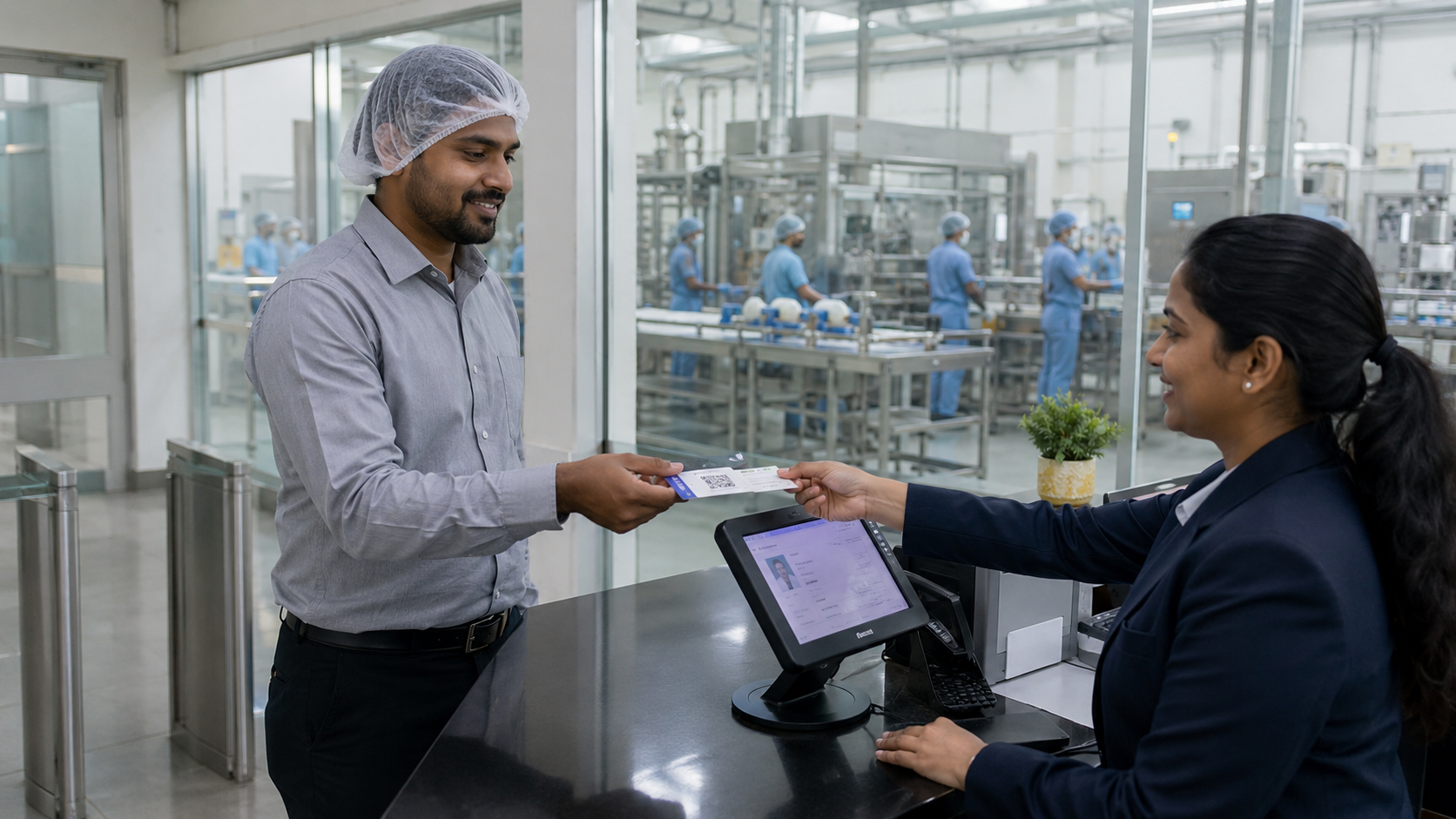
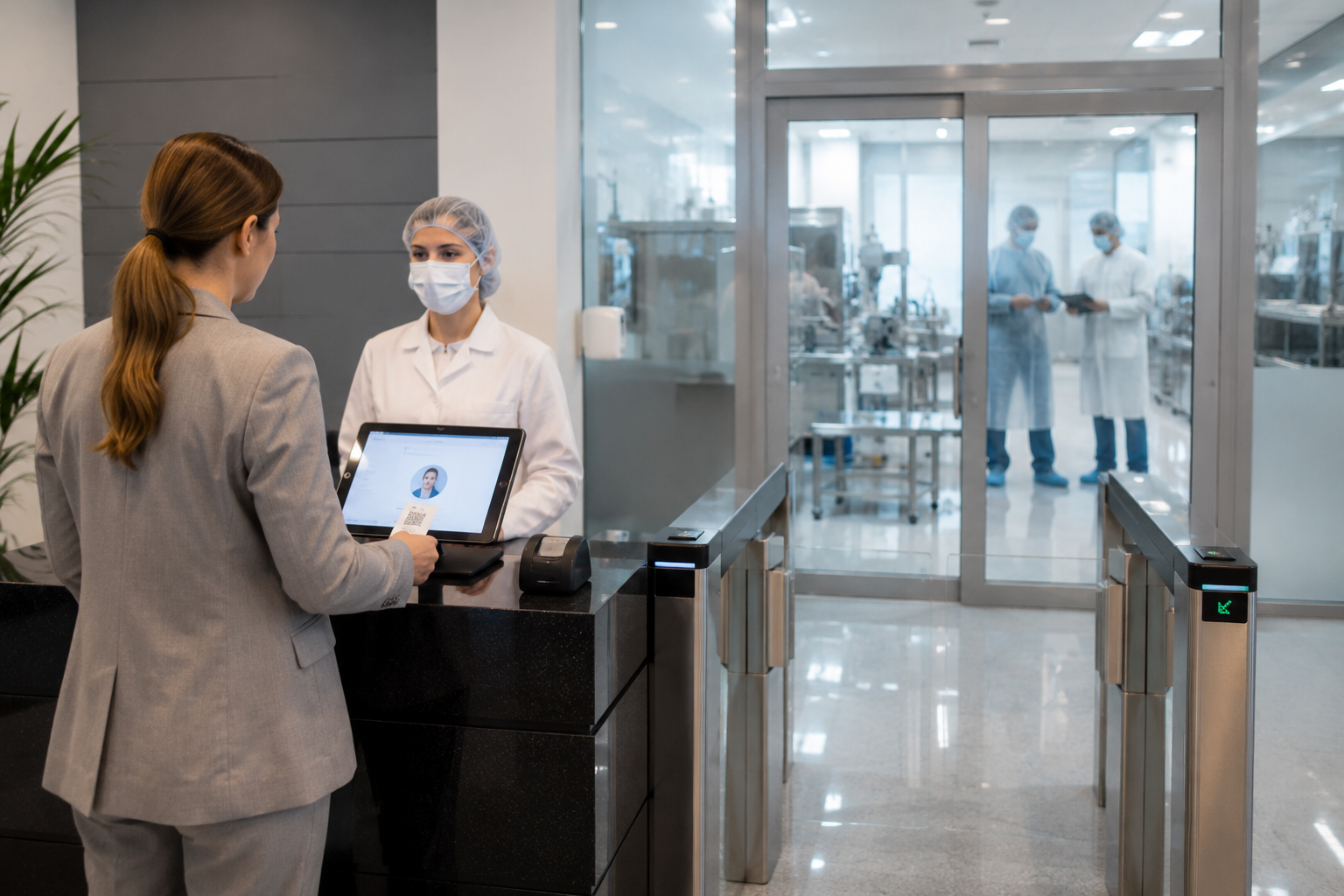
A pharmaceutical visitor management system creates a controlled digital process for pre-registration, identity verification, GMP or safety acknowledgement, host and quality approval, badge issue, permitted-zone access, live visitor tracking, emergency headcount and checkout.
This buyer guide targets high-intent searches such as pharmaceutical visitor management system, pharma factory visitor management software, GMP visitor management, life sciences visitor management, pharma contractor management, cleanroom visitor access, laboratory visitor management, API plant visitor tracking and audit-ready visitor logs.
Analysis: Is a Dedicated Pharmaceutical VMS Blog Already Published?
The existing N&T content library includes industrial, factory, contractor, screening, integration, evacuation and pricing articles, but it does not currently contain a dedicated pharmaceutical manufacturing visitor management provider comparison. This article fills that industry-specific search gap without replacing the broader industrial guide.
Quick Answer: What Is a Pharmaceutical Visitor Management System?
It is software that controls and records the entry of visitors and contractors into pharmaceutical factories, API plants, formulation units, laboratories, R&D centres, warehouses and regulated support areas. It can apply different approvals, documents, inductions, escorts, badges and access permissions according to the visitor type, site, purpose and risk level.
A VMS supports the site’s procedures; it does not by itself make a facility GMP, FDA or 21 CFR Part 11 compliant. The system, configuration, validation approach, operating procedures and records relied upon for regulated activities must be assessed against the organization’s applicable requirements.
Why Pharmaceutical Factory Visitor Management Is Different
A general office visitor may only enter a reception area and meeting room. A pharmaceutical visitor may need controlled movement around production, quality-control laboratories, warehouses, utilities, engineering areas, packaging lines or R&D facilities. Approval can depend on confidentiality, hygiene, gowning, health declarations, safety training, photography rules, escort status and the visitor’s actual task.
Pharmaceutical operations also need reliable evidence. Security, QA, EHS and site management may need to identify who entered, who approved the visit, what instructions were accepted, which badge was issued, when the visitor left and whether an exception or override occurred.
Best Pharmaceutical Manufacturing Visitor Management Software Providers to Evaluate in 2026
The following list compares platforms that can be evaluated for pharmaceutical, biotech, laboratory or regulated manufacturing environments. N&T Software is listed first because this buyer guide is published on the N&T website. Every provider should still be tested using the same pharma-factory scenarios, integrations, security review and written scope.
1. N&T Software Visitor Management System
N&T Software can be evaluated for visitor pre-registration, QR and manual check-in, OTP verification, host approvals, digital gate passes, visitor photographs, email or WhatsApp notifications, multi-branch control, department-based workflows, check-in and checkout, searchable logs, reports and integration planning. Review the N&T Visitor Management Software and request a pharmaceutical manufacturing demonstration using your actual visitor categories, approval chain and restricted areas.
For pharma deployment, the written scope should confirm GMP and safety acknowledgements, NDA capture, QA or EHS approval, contractor documents, badge design, escort rules, zone permissions, audit exports, retention, offline fallback and access-control integration.
N&T Software Pricing from About USD 1.19 Per Day Per Branch
The N&T Standard Plan is currently listed at USD 433 per branch per year, equal to approximately USD 1.19 per day when divided across 365 days. The Enterprise Plan is USD 633 per branch per year, equal to approximately USD 1.73 per day.
Both plans are positioned with no user limit. Training and installation is listed separately at USD 100 one time per branch. Standard AMC is USD 333 per year, approximately USD 0.91 per day, while Enterprise AMC is USD 473 per year, approximately USD 1.30 per day.
These daily figures explain the annual cost in an easier format; they are not daily billing rates. Review the current N&T pricing page and request a written pharma-specific quotation for integrations, validation support, custom workflows and hardware.
2. Envoy
Envoy provides a dedicated biotech and pharma workplace platform describing tailored pre-registration and check-in flows, NDAs, safety protocols, PPE requirements, access-control integrations, audit-ready digital records and report exports for GMP or GLP reviews.
3. Sign In App
Sign In App markets a dedicated pharmaceutical visitor management solution for cGMP facilities, biotech laboratories and research environments. Its current page highlights time-stamped records, access-control connections, compliance workflows, live visibility, emergency response and consolidated audit trails.
4. Vizito
Vizito’s current pharmaceutical and life-sciences solution describes confidentiality and GxP-area protocols, badge printing, time-stamped check-in and checkout, host records, multi-site rollout and audit-ready visitor evidence.
5. VisitorFlow
VisitorFlow publishes a dedicated pharmaceutical visitor management guide covering QR entry, host approval, training and clearance checks, digital documentation, audit trails and centralized visitor visibility across pharmaceutical manufacturing, laboratories and research sites.
6. Sine by Honeywell
Sine by Honeywell supports visitor and contractor check-in through mobile, kiosk, geofence and dashboard workflows. Its current feature overview includes badge printing, NDAs, customized entry requirements, evacuation information, live onsite records, integrations and real-time visitor screening on higher plans.
7. Rapid Global
Rapid Global’s visitor management platform includes QR, mobile, kiosk and camera-based sign-in, customized site inductions, compliance checks for people and vehicles, onsite visibility and evacuation messaging. It may suit organizations seeking broader contractor, induction and workplace-safety modules.
Who Enters a Pharmaceutical Manufacturing Facility?
Typical categories include regulatory inspectors, customer auditors, certification auditors, equipment and calibration engineers, maintenance contractors, validation consultants, IT and automation vendors, raw-material suppliers, packaging vendors, transport drivers, temporary workers, candidates, researchers and business guests.
Each category should follow a different process. An auditor may need QA ownership and controlled document access. A maintenance engineer may need a work order, safety induction, tools declaration and escort. A delivery driver may only need gate-to-warehouse access. A business visitor should not automatically receive entry to production or laboratories.
End-to-End Pharma Visitor Management Workflow
1. Pre-Registration
The host submits the visitor’s purpose, company, date, site, department, requested areas and escort requirement. The visitor receives an invitation, directions, privacy information and pre-arrival requirements.
2. Document and Training Completion
The visitor can complete an NDA, hygiene statement, photography restriction, GMP awareness, safety briefing, health declaration or contractor-document upload before travelling to the site.
3. Host, QA, EHS or Security Approval
Routine office visits may require host approval only. Production, laboratory, engineering or contractor visits may require multi-level approval from QA, EHS, security, department management or another authorized owner.
4. Gate Identity Verification and Check-In
Security verifies the expected visit, identity, approval, document status and host. The system records the arrival time and can print a badge or issue a time-limited QR pass.
5. Access by Zone, Purpose and Time
The visitor receives only the access required for the approved visit. Office, warehouse, utilities, production, QC laboratory, R&D and cleanroom areas should not share one unrestricted visitor permission.
6. Escort and Live Onsite Visibility
The badge can identify the host, escort requirement and validity. Security and authorized teams can see who is currently onsite, which company they represent and whether a visit is overdue.
7. Checkout and Record Closure
Checkout records the exit time, closes the temporary credential, confirms badge return and can document material, tool or asset exit requirements. Missing checkout and overstay alerts should be investigated.
Must-Have Features for Pharma Manufacturing Units
High-value requirements include configurable visitor types; pre-registration; QR, OTP, kiosk and assisted check-in; host and multi-level approvals; identity review; NDA and policy acknowledgement; GMP, hygiene and safety instructions; contractor-document validation; badge printing; zone and time restrictions; escort identification; vehicle records; watchlists; emergency headcount; audit logs; retention controls; multi-site reporting; APIs and access-control integration.
GMP, FDA and Data-Integrity Considerations
FDA explains that drug CGMP regulations establish minimum requirements for manufacturing methods, facilities and controls. Review the official FDA CGMP resources when defining which visitor records, approvals or facility controls are relevant to your quality system.
WHO describes GMP as a quality-management approach ensuring medicines are consistently produced and controlled to appropriate standards. Its pharmaceutical GMP guidance and the European Commission’s EudraLex Volume 4 provide authoritative frameworks for regulated manufacturing.
FDA’s Part 11 scope and application guidance explains that Part 11 applies to specified electronic records and signatures maintained or submitted under FDA requirements. Do not label an entire VMS “Part 11 compliant” without defining intended use, applicable records, validation, access controls, audit trails and predicate-rule responsibilities.
Pharma Areas That Need Different Visitor Rules
Formulation and Packaging Plants
Apply production-floor restrictions, gowning or hygiene requirements, photography controls, packaging-material protection and escort rules.
API and Bulk Drug Plants
Include chemical-safety instructions, PPE, hazardous-area restrictions, contractor permits, vehicle control and task-specific access.
Sterile and Biologics Facilities
Use stricter access, hygiene, contamination-control, gowning, health and escort procedures. A front-gate approval should not automatically authorize entry to sterile manufacturing or controlled clean areas.
Quality-Control and R&D Laboratories
Protect instruments, controlled samples, analytical data, formulas, research information and laboratory areas through confidentiality, authorization and escorted access.
Pharmaceutical Warehouses
Manage transporters, supplier vehicles, material deliveries, warehouse visitors, loading areas and proof of exit while separating driver access from storage and quality areas.
How to Compare Pharma Visitor Management Providers
Ask every provider to demonstrate the same scenarios: a regulatory inspector, a customer auditor, a calibration engineer, a contractor with an expired document, a supplier delivery, a visitor requesting laboratory access, a watchlist match, an emergency evacuation, an internet outage and a request to retrieve historical records for an audit.
Score standard functionality separately from configuration, customization and third-party integrations. Require written details for implementation, data migration, validation responsibilities, user acceptance testing, support, data export, retention, deletion, renewal charges and exit assistance.
Use the copy-ready Visitor Management System RFP Template to issue the same 50 requirements and vendor-evaluation checklist to every shortlisted provider.
Pharmaceutical VMS Implementation Checklist
Map every gate, reception, production area, warehouse, laboratory and restricted zone. Define visitor and contractor categories. Document required approvals, inductions, acknowledgements, ID checks, badges, escorts and retention. Confirm integrations. Pilot with real security, QA, EHS, IT and operational users. Test emergency and outage scenarios before go-live.
Follow the detailed Visitor Management Implementation Checklist and adapt each step to the site’s quality system, change-control and validation procedures.
High-Demand Pharmaceutical Visitor Management Keywords Covered
Primary buyer keywords include pharmaceutical visitor management system, pharma visitor management software, pharma factory visitor management system, pharmaceutical manufacturing visitor software, GMP visitor management software, life sciences visitor management system, biotech visitor management software, API plant visitor management, cleanroom visitor access control and laboratory visitor management software.
Commercial and supporting keywords include best pharma visitor management software providers, pharmaceutical visitor software pricing, GMP audit-ready visitor logs, FDA visitor management software, pharma contractor management system, pharmaceutical gate pass system, visitor badge software for pharma, pharmaceutical access control integration, QA visitor approval workflow, EHS visitor induction, pharma visitor tracking and emergency headcount for pharmaceutical plants.
Frequently Asked Questions
What is pharmaceutical visitor management software?
It is a digital system for registering, approving, screening, badging, tracking and checking out visitors and contractors entering pharmaceutical manufacturing, laboratory and research facilities.
Can a VMS make a pharmaceutical factory GMP compliant?
No single visitor system makes a facility GMP compliant. It can support documented access, acknowledgements, approvals and audit evidence when correctly configured and governed by appropriate procedures.
Does 21 CFR Part 11 apply to visitor records?
It depends on whether specific electronic visitor records or signatures are required by an applicable predicate rule and are relied upon electronically. The intended use and record classification should be determined with quality, legal and validation teams.
Can visitors complete GMP and safety instructions before arrival?
Yes. Pre-arrival workflows can collect acknowledgements, documents and training completion, but the site should still verify identity, current approval and any arrival-specific requirements.
Can the system restrict visitors from cleanrooms and laboratories?
Yes, when visitor approval and temporary credentials are configured by zone, purpose, time, training and escort requirement and integrated with suitable physical access controls.
Can it manage contractors and service engineers?
Yes. A suitable workflow can include contractor company, worker identity, documents, induction, work order, equipment, tools, permit, host, approved area and expiry.
How much does N&T pharma visitor management software cost?
N&T’s current Standard Plan is USD 433 per branch per year, approximately USD 1.19 per day. Enterprise is USD 633 per branch per year, approximately USD 1.73 per day. Pharma-specific custom work and integrations require a tailored quotation.
Does N&T charge per receptionist or user?
The current N&T Standard and Enterprise plan information states no user limit. Confirm the final commercial terms and scope in the written quotation.
Can a pharma VMS support emergency evacuation?
It can provide a live visitor and contractor register, emergency notifications, safe-status responses and digital muster records. Accuracy depends on consistent entry, movement and checkout processes.
Related N&T Visitor Management Resources
- Industrial Visitor Management Software Pricing Comparison
- Contractor Visitor Management System Guide
- Visitor Screening, Watchlists and Real-Time Alerts
- Visitor Management Integration Guide
- Visitor Evacuation and Digital Muster Guide
- Visitor Management Cost and Pricing Guide
Final Recommendation
A pharmaceutical visitor management system should connect the visitor’s identity, business purpose, approval, training, documentation, permitted area, escort, badge validity and checkout into one traceable workflow. A digital reception register without zone control, exception handling and audit evidence is not enough for a regulated manufacturing environment.
N&T Software is positioned first as an affordable provider to evaluate, with Standard pricing equivalent to about USD 1.19 per day per branch and Enterprise pricing equivalent to about USD 1.73 per day per branch. The final selection should follow a pharma-specific demonstration, security and quality review, integration test, pilot and written scope.
Contact N&T Software to discuss pharmaceutical factory visitor management, GMP and safety acknowledgements, contractor workflows, digital gate passes, audit reports, access-control integrations and a tailored demonstration.