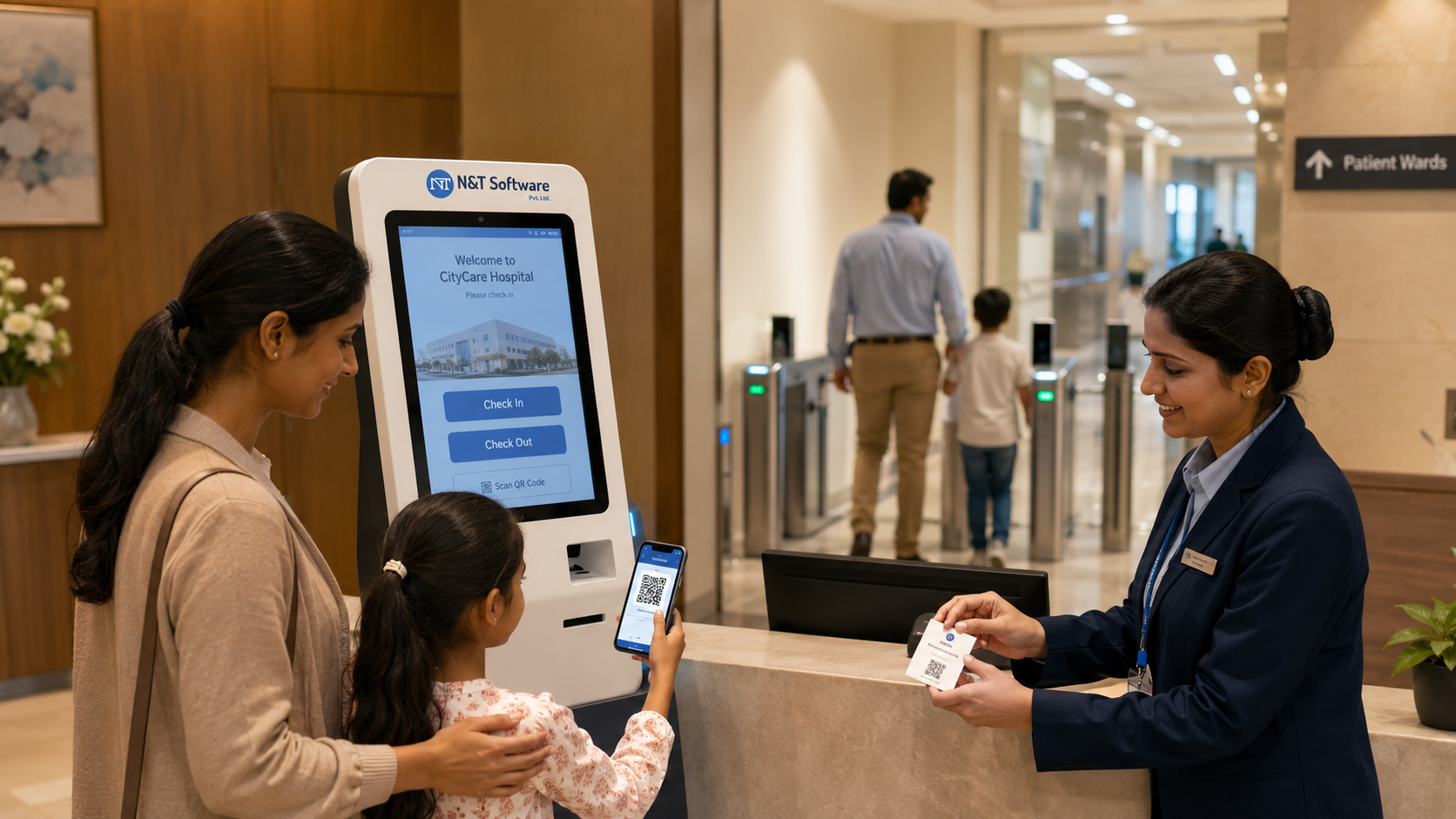
A complete 2026 guide to hospital visitor management systems, covering patient visitors, digital registration, security, access control, badges, privacy, infection prevention, implementation and vendor selection.
Hospitals welcome hundreds or thousands of people every day: family members, caregivers, vendors, contractors, delivery teams, medical representatives, job candidates and emergency visitors. Every arrival creates a legitimate human need—and a security, privacy and operational responsibility.
A hospital visitor management system gives healthcare facilities a structured way to register, approve, identify, track and check out non-employees. It replaces open paper logbooks and disconnected spreadsheets with a controlled digital process that can support patient visiting rules, restricted-area access, infection-prevention instructions, emergency accountability and auditable security records.
This 2026 guide explains what hospital visitor management software does, how it works, which features matter, how it supports patient visitors and access control, what risks to avoid, and how to evaluate a provider. It is written for hospital administrators, security leaders, facility managers, IT teams, nursing operations, compliance professionals and procurement teams.
Table of Contents
- What a Hospital Visitor Management System Is
- Why Hospitals Need Digital Visitor Management
- How a Hospital Visitor Management System Works
- Key Features to Prioritize
- Patient Visitor Workflows by Care Area
- Hospital Visitor Management vs Paper Registers
- Security, Privacy and Access Control
- Implementation Best Practices
- Common Mistakes to Avoid
- Hospital Visitor Management Trends for 2026
- How to Choose the Right Provider
- Frequently Asked Questions
Quick Answer: What Is a Hospital Visitor Management System?
A hospital visitor management system is software that registers and verifies visitors, applies patient and department approval rules, issues digital or printed passes, controls access by area and time, sends host notifications, tracks who is currently inside, and creates searchable reports for security, compliance and emergency response.
The strongest systems do more than digitize a reception form. They support different workflows for general wards, intensive care, maternity, paediatrics, laboratories, administration, pharmacies, loading areas and contractor zones. They also give hospitals a practical way to update visiting rules quickly when clinical operations or infection-control requirements change.
What Is Hospital Visitor Management Software?
Hospital visitor management software is a specialized visitor registration and access-control platform designed for healthcare environments. It manages the journey from pre-registration to final check-out while keeping the process simple for visitors and controlled for hospital staff.
Unlike a basic office sign-in app, a hospital system may need to connect each visit to a patient, ward, clinic, department, staff host, contractor work order or approved service activity. It should support compassionate exceptions without removing accountability. For example, a family member may be permitted outside standard hours after approval from an authorized nurse or administrator, while the system records who approved the exception and when the pass expires.
A well-configured platform can also separate ordinary visitor information from sensitive clinical information. Security teams generally need identity, destination, approval and presence status—not a patient’s diagnosis. This separation is important for privacy, least-privilege access and staff trust.
Why Hospitals Need a Digital Visitor Management System
Healthcare facilities are open, emotionally sensitive and operationally complex. Visitors may arrive without appointments, at stressful moments or with limited understanding of the building. At the same time, hospitals contain restricted treatment zones, medicines, medical records, laboratories, critical infrastructure and vulnerable patients.
1. Paper Registers Expose Visitor Information
Open logbooks allow one visitor to see another person’s name, phone number, destination or patient reference. Handwriting can be incomplete, records are difficult to search, and old registers are often stored without clear retention or destruction rules.
2. Security Teams Need Real-Time Presence Data
A paper book cannot reliably show who is still inside, which badge is active or whether a visitor entered a restricted area. During an evacuation, lockdown or clinical emergency, security teams need a live visitor list—not a stack of pages.
3. Different Care Areas Need Different Rules
General wards may allow multiple visiting windows, while intensive care, neonatal care, maternity, behavioural health or isolation areas may require tighter limits. A hospital visitor registration system can apply rules by ward, patient category, visitor type, time and approval level.
4. Infection-Prevention Policies Must Reach Visitors
Healthcare infection prevention depends on consistent processes, education and monitoring. A digital check-in workflow can display current hand-hygiene, mask, symptom, vaccination or protective-equipment instructions based on hospital policy. It can record acknowledgement, but it should never be treated as a substitute for clinical screening or professional judgement.
5. Contractors and Vendors Create Additional Risk
Maintenance technicians, equipment suppliers, construction teams, waste handlers and temporary workers may require identity verification, induction, permits, insurance, safety checks and access only to approved work zones. Their workflow is materially different from a patient visitor and should be configured separately.
How a Hospital Visitor Management System Works
The exact workflow depends on hospital policy, but a practical digital visitor journey usually follows these steps:
- Pre-registration: A patient, staff member, ward or department registers an expected visitor and defines the permitted date, time, destination and approval conditions.
- Arrival and identity capture: The visitor checks in using a reception desk, tablet, self-service kiosk, mobile link or QR code. The hospital collects only the information needed for the visit.
- Policy acknowledgement: The visitor sees privacy notices, visiting rules, safety instructions and any current infection-prevention requirements.
- Approval: The system routes the request to the authorized ward, nurse, department, host or security role. High-risk or after-hours visits can require an additional approval level.
- Pass issuance: Once approved, the platform creates a digital QR pass or prints a temporary visitor badge showing the permitted destination and validity period.
- Entry and live tracking: Security records the visitor as on-site. Optional access-control integration can permit only approved doors, lifts or zones.
- Check-out and record closure: The visitor checks out at reception, a kiosk, gate or mobile link. The system deactivates the pass and stores the visit record according to the hospital’s retention policy.
For repeat caregivers or long-term patient support, the hospital can use recurring permissions with scheduled revalidation rather than forcing a completely new process each day. The system should still preserve expiry dates, revocation controls and a clear audit trail.
Key Features of a Hospital Visitor Management System
Patient-Linked Visitor Registration
The platform should allow staff to associate a visitor with the correct patient, ward or care unit without displaying unnecessary clinical details. Search controls, masked information and role-based permissions help reduce the chance that reception staff select the wrong patient or reveal sensitive information.
Visitor Pre-Registration and QR Check-In
Pre-registration reduces queues and gives staff time to review special circumstances before arrival. A visitor can receive a QR code by email or messaging service, scan it at the entrance and complete only the remaining verification steps.
Self-Service Kiosk and Assisted Check-In
A kiosk can speed up routine visits, while assisted registration remains essential for elderly visitors, people with disabilities, visitors without smartphones, emergency arrivals and anyone who needs language support. Hospitals should never design a process that assumes every visitor is digitally confident.
Visitor Badge Printing and Temporary Passes
A hospital visitor badge system should show the visitor’s name or identifier, photograph where required, destination, visitor type, issue time and expiry. QR badges can link to the approved record and help security validate the pass without printing sensitive patient information.
Ward, Department and Time-Based Approval
Approval rules should be configurable. A general ward may allow host approval, while intensive care or after-hours visits may require an authorized clinical role. The system should record who approved, rejected, extended or revoked each pass.
Real-Time Visitor Tracking and Emergency Lists
Security and emergency teams need an accurate view of expected, waiting, approved, on-site, overdue and checked-out visitors. During evacuation or lockdown, a live list can be filtered by building, floor, ward, entrance or assembly point.
Watchlists, Restricted Visitors and Safeguarding
Hospitals may need to flag court restrictions, patient-requested exclusions, aggressive behaviour, safeguarding concerns or previously revoked access. Watchlist controls require strict authorization, accurate records, review dates and an escalation process to reduce unfair or outdated decisions.
Infection-Control Instructions and Screening Workflows
The system can show current visitor education, route symptomatic people to staff, apply limits during outbreaks and record policy acknowledgement. Rules should be controlled by clinical and infection-prevention leadership, not by the software vendor.
Contractor and Vendor Management
A contractor visitor management module can collect company details, work orders, permits, insurance, safety induction, PPE confirmation, supervisor approval, equipment information and authorized work areas. It can also alert staff before a certificate expires.
Privacy, Retention and Audit Controls
Hospitals should be able to define which fields are collected, who can see them, how long records are retained, how exports are controlled and how deletion is verified. Audit logs should capture administrator actions, approval changes, watchlist edits and data exports.
Integrations
Useful integrations may include access-control systems, turnstiles, lift controls, parking, badge printers, employee directories, appointment systems, emergency notification tools, identity providers and APIs. Clinical-system integration should be limited to the minimum data required for the visitor workflow.
Patient Visitor Workflows by Hospital Area
General Wards
General wards typically need visiting windows, patient or ward confirmation, maximum visitor counts and time-limited passes. The system can prevent multiple people from using one invitation and show when the permitted visitor limit has been reached.
Intensive Care, Neonatal and High-Dependency Units
Critical-care areas often require named visitors, fewer simultaneous visitors, closer clinical approval and stricter time limits. A digital system can support compassionate exceptions while ensuring that the decision is recorded and visible to security.
Maternity and Paediatric Care
Maternity and paediatric facilities may need guardian verification, approved-family lists, newborn-security procedures and stricter controls around photography or access. The visitor system should complement—not replace—clinical safeguarding and infant-security protocols.
Emergency Departments
Emergency departments need a fast process that does not delay urgent care. Registration may occur after immediate clinical triage, with staff issuing a temporary pass and later completing additional details when appropriate.
Outpatient Clinics and Diagnostic Centres
High-Intent Buyer Requirements
- Patient visitor scheduling and visiting-hour controls
- Department approval, caregiver and vendor workflows
- Healthcare privacy, badge printing and restricted-area access
- Emergency visitor lists and multi-location hospital reporting
Related Visitor Management Resources
N&T Software Visitor Management System — Explore visitor check-in, approvals, QR passes, badges, alerts and reporting.
Visitor Management System Pricing — Review N&T plans and request complete pricing.
Visitor Sign-In System Guide — Compare digital registration, check-in and badge workflows.
Visitor Badge Printing and QR Pass Guide — Plan secure temporary credentials.
Visitor Data Privacy and Retention Guide — Improve data collection, access and retention controls.
Book a Free Visitor Management Demo
Contact N&T Software to discuss your industry, branches, gates, visitor volume, approval workflow, hardware and integrations.