Manual visitor registers may look simple, but in 2026 they create serious security risks. From unauthorized access and inaccurate visitor data to privacy exposure, slow gate entry, and weak emergency response, paper-based visitor logs are no longer suitable for modern facilities.
Why Manual Visitor Registers Are a Security Risk in 2026
In 2026, security is no longer limited to locks, gates, guards, and CCTV cameras. Modern facility security now depends on real-time visibility, accurate identity verification, controlled access, compliance-ready records, and fast incident response. Whether it is a corporate office, manufacturing plant, school, hospital, warehouse, residential community, data center, or government facility, every visitor entry point is now part of the wider security ecosystem.
Yet many organizations still rely on manual visitor registers: paper books placed at reception desks or security gates where visitors write their name, phone number, company, purpose of visit, host name, and entry time. On the surface, this may look simple and inexpensive. In reality, manual visitor logs create serious security gaps. They are easy to manipulate, difficult to verify, slow to manage, hard to audit, and almost useless during emergencies when real-time data is required.
The biggest problem with manual visitor registers is that they create an illusion of control. A name written in a book does not prove identity. A signature does not confirm authorization. A handwritten phone number does not guarantee traceability. A manual entry time does not prove the person actually entered or exited at that time. In today’s threat landscape, where social engineering, insider risk, unauthorized access, data theft, and physical intrusion are growing concerns, this level of visitor control is no longer enough.
Manual Registers Make Unauthorized Access Easier
The primary purpose of visitor registration is to control who enters a facility. A manual register fails at this basic requirement because it depends almost entirely on trust. If a visitor writes “John Smith,” “vendor,” or “meeting with admin,” the guard or receptionist may not have any instant way to verify whether that information is accurate.
Consider a simple scenario. A person walks into a busy manufacturing facility during morning shift change. There are delivery vehicles waiting, employees entering, contractors asking questions, and security staff under pressure to keep the gate moving. The visitor writes a fake name in the register and says they are there to meet the maintenance department. If there is no automated host approval, ID verification, pre-registration, watchlist check, or visitor badge validation, that person may enter restricted premises with minimal resistance.
This is not just a front-desk issue. Unauthorized access can lead to theft, sabotage, safety incidents, data exposure, workplace violence, or reputational damage. In sensitive environments such as factories, hospitals, laboratories, schools, IT companies, and data centers, the cost of one unauthorized visitor can be far greater than the cost of implementing a modern visitor management system.
Manual registers also make tailgating easier. When visitor entry is not linked to a digital pass, access gate, QR code, badge, or real-time approval, it becomes easier for one person to enter using another person’s purpose or to follow behind an employee without proper validation. Security teams may believe the visitor has signed in, but they may not know whether the visitor was actually authorized, escorted, or restricted to a specific area.
Handwritten Data Is Often Inaccurate or Unreadable
A visitor register is only useful if the information inside it is accurate. Unfortunately, manual logs are full of errors. Visitors may write incomplete names, incorrect phone numbers, unreadable handwriting, vague company names, false host details, or wrong entry times. Some may skip fields entirely because they are in a hurry. Others may intentionally provide incorrect information to avoid being contacted later.
For example, after an incident, the security team may need to identify everyone who entered the facility between 10:00 a.m. and 12:00 p.m. A manual register may show names, but the handwriting is unclear. Some entries may not include exit times. A contractor may have signed in using only a first name. A delivery person may have written the company name but not the vehicle number. A visitor may have entered the wrong mobile number. At that point, the register becomes a weak investigation tool.
Data accuracy matters because visitor logs are often used after something has already gone wrong. If a laptop is missing, a restricted area was accessed, a safety violation occurred, confidential documents were seen, or a suspicious person was reported, security teams need reliable data. Manual registers rarely provide that reliability.
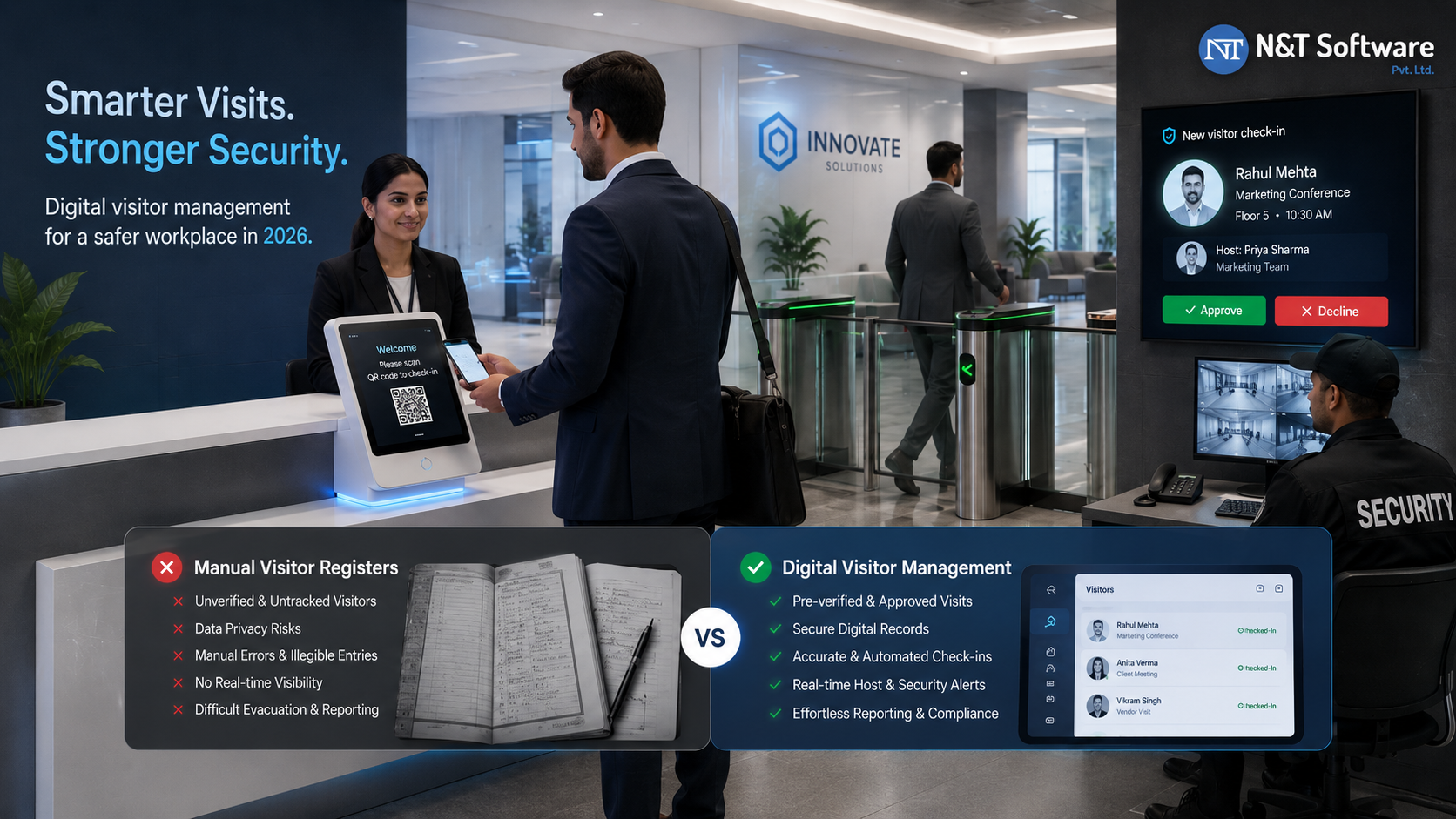
Digital visitor systems reduce this problem by capturing structured information. They can require mandatory fields, scan IDs, validate mobile numbers, capture photos, issue digital passes, record check-in and check-out times automatically, and maintain a searchable record. A paper book cannot do that.
Manual Gate Entry Slows Down Operations
Security should protect the facility without creating unnecessary delays. Manual visitor registers often fail here as well. At busy gates, every visitor must stop, pick up a pen, write their details, wait for confirmation, explain their purpose, and sometimes wait while the guard calls the host. During peak hours, this creates long queues, frustrated visitors, delayed deliveries, and pressure on security staff.
Gate entry inefficiency is not just an inconvenience. It becomes a security risk because rushed processes lead to skipped checks. When too many people are waiting, guards may allow visitors inside before proper verification is complete. Hosts may approve verbally without checking details. Contractors may be allowed through because they are “regular visitors.” Delivery drivers may enter without recording full vehicle details. Over time, the gate becomes a bottleneck where security discipline slowly weakens.
This issue is especially serious for industrial facilities, logistics hubs, schools, hospitals, and large office campuses where daily visitor volume is high. A factory may receive raw material suppliers, maintenance vendors, transport drivers, auditors, consultants, job applicants, government inspectors, and temporary workers on the same day. Managing all of them manually increases the chance of mistakes.
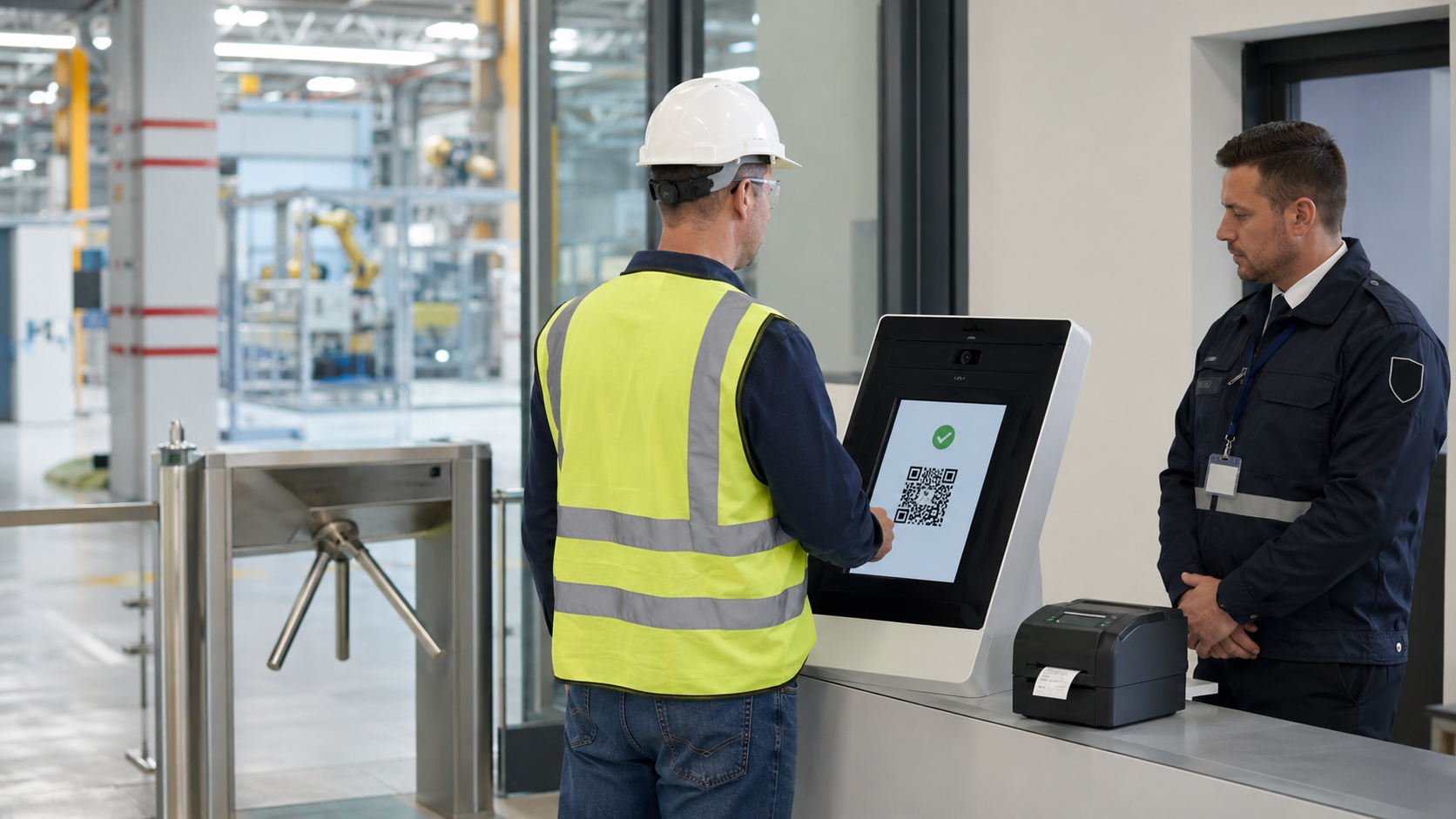
Automated visitor management improves gate flow by allowing pre-registration, QR-based check-in, host approval notifications, digital visitor badges, vehicle entry tracking, and instant record creation. Instead of writing the same information again and again, returning vendors or approved visitors can be processed faster while still maintaining stronger control.
Paper Logs Expose Personal Data
Manual visitor registers create privacy risks because every visitor can often see the personal information of previous visitors. Names, phone numbers, addresses, signatures, company names, and visit purposes may be visible on the same page. This is poor data handling practice.
Imagine a hospital reception desk where patients, vendors, and attendants write their information in a shared register. Or a corporate office where candidates coming for interviews can see names and phone numbers of earlier visitors. Or a residential building where delivery agents can view details of residents’ guests. This kind of open exposure may seem normal because it has been done for years, but in 2026 it is increasingly unacceptable.
Organizations are expected to handle personal data responsibly. A manual visitor book makes it difficult to control who sees visitor information, how long it is retained, who can access it, and when it should be destroyed. It can also be photographed, misplaced, damaged, stolen, or copied without detection.
Modern visitor systems provide better privacy controls. Visitor information can be stored securely, access can be role-based, retention rules can be configured, and records can be retrieved only by authorized personnel. This protects both the organization and the visitor.
Manual Registers Are Weak During Emergencies
During an emergency, security teams need one critical answer: who is inside the facility right now? Manual registers often cannot provide this answer quickly or accurately.
A fire alarm goes off. The evacuation starts. Employees move to assembly points. Contractors are working in a utility area. A vendor is inside the warehouse. A visitor is with the finance team. A delivery driver entered but never signed out. The paper register may show who signed in, but it may not confirm who actually left. If exit time is missing, emergency responders may waste valuable time searching for someone who has already gone—or worse, assume someone left when they are still inside.
This is a serious facility safety issue. Visitor management is not only about security; it is also about duty of care. Organizations are responsible for the safety of everyone on-site, including guests, vendors, contractors, and temporary workers. A manual register cannot send emergency alerts, generate a live occupancy list, identify visitors by location, or notify hosts instantly.
Automated systems can support emergency response by providing real-time visitor status, digital evacuation lists, host mapping, visitor photos, and instant reports. In a crisis, speed and accuracy matter. Paper slows both down.
Manual Logs Make Audits and Investigations Difficult
Security audits depend on evidence. When visitor records are handwritten, incomplete, damaged, or stored in multiple registers across different gates, producing reliable audit data becomes difficult.
A security manager may need to answer questions such as: How many visitors entered last month? Which vendors visited the server room? Did all contractors receive safety instructions? Who approved the visitor? Did the visitor exit on time? Which vehicle entered with the visitor? Was the same person denied entry earlier? Was the visitor escorted?
With a manual register, answering these questions can take hours or days. Someone must physically search through pages, interpret handwriting, compare times, and manually prepare reports. Even then, the result may not be accurate.
This becomes a major weakness for organizations with compliance obligations, safety standards, customer audits, or internal security policies. If an incident occurs and the organization cannot produce reliable visitor records, it may appear negligent even if the original process was followed.
Digital visitor systems make audits easier by maintaining searchable logs, timestamps, host approvals, visitor categories, document uploads, badge history, and check-in/check-out records. This creates accountability and reduces the burden on security and administration teams.
Visitor Security Issues Are Becoming More Complex
The modern visitor is not always a simple guest. Visitors may include contractors, vendors, consultants, auditors, delivery agents, temporary staff, interview candidates, technicians, drivers, inspectors, customers, or third-party service providers. Each category carries a different level of risk and requires different access rules.
A contractor may need access to electrical rooms. A delivery driver may need loading dock access. An auditor may need to meet finance leadership. A candidate may only need reception access. A vendor may need to bring tools or equipment. A technician may need to enter after working hours.
Manual registers treat most visitors the same. They record basic details but do not enforce category-based workflows. They cannot automatically require safety instructions for contractors, NDA acceptance for business visitors, host approval for vendors, vehicle documentation for drivers, or restricted-area permissions for technicians.
This is a major gap because visitor risk is not equal. A person entering a lobby for a meeting is different from a person entering a production floor, IT room, warehouse, laboratory, or school area. Without automated workflows, organizations rely heavily on human memory and judgment at the gate. That increases the chance of inconsistency.
Manual Systems Do Not Integrate With Modern Security Tools
Security in 2026 is increasingly connected. Access control systems, CCTV, identity management, alarms, emergency response platforms, HR systems, and compliance dashboards all work better when data is integrated. Manual registers remain disconnected from this ecosystem.
A paper log cannot automatically trigger a host notification. It cannot activate a temporary access card. It cannot match visitor check-in with CCTV footage. It cannot alert security if a banned visitor tries to enter. It cannot generate real-time reports for management. It cannot integrate with access control to restrict movement. It cannot support multi-location visitor visibility.
This disconnect makes manual registers outdated. Even if a facility has advanced CCTV cameras, biometric employee access, and smart gates, a paper visitor book can still become the weakest link. Attackers, intruders, or careless visitors often exploit the weakest process, not the strongest technology.
The Hidden Cost of “Low-Cost” Manual Registers
Manual registers appear inexpensive because they require only paper, pens, and staff. But the hidden costs are much higher. These include security incidents, delayed entry, staff time, poor visitor experience, audit difficulty, privacy exposure, emergency confusion, and operational inefficiency.
There is also reputational cost. Visitors judge an organization from the moment they arrive. A manual register at the front gate can make even a modern company look outdated. For clients, investors, auditors, and enterprise customers, a weak visitor process may raise questions about the organization’s overall security maturity.
A facility that protects employees with access cards but asks unknown visitors to write their details in a notebook is sending a mixed message. It says employee access is important, but visitor access is not. In reality, visitors often require even stronger controls because they are less familiar, less predictable, and harder to monitor.
The Need for Modern Automated Alternatives
Manual visitor registers are no longer suitable for organizations that care about security, safety, privacy, compliance, and operational efficiency. They may still work for very low-risk environments, but for most modern facilities, they create more risk than value.
A modern visitor management system helps solve these problems by offering digital check-in, QR code entry, host approval, visitor badges, ID capture, photo verification, watchlist alerts, contractor management, vehicle entry tracking, access control integration, emergency reports, and audit-ready logs. More importantly, it turns visitor entry from a passive recordkeeping activity into an active security control.
The goal is not to make entry complicated. The goal is to make it secure, fast, consistent, and traceable. A good automated system improves the visitor experience while giving security teams better visibility and control.
Why This Topic Matters in 2026
Visitor entry is no longer a simple reception task. It is now a critical part of physical security, workplace safety, data protection, and compliance. As organizations face growing risks from unauthorized access, vendor mismanagement, contractor movement, workplace incidents, and privacy expectations, manual visitor registers create unnecessary exposure. A paper log cannot verify identity, trigger host approval, track real-time presence, or provide instant reports during emergencies. This makes manual visitor registers one of the weakest points in modern facility security.
Conclusion
In 2026, a manual visitor register is not just an old-fashioned process. It is a security weakness. It allows inaccurate data, enables unauthorized access, slows gate operations, exposes personal information, weakens emergency response, and makes investigations difficult. It also prevents visitor management from becoming part of a connected security strategy.
Facilities today need more than handwritten names in a book. They need verified identities, approved access, real-time tracking, privacy protection, emergency visibility, and reliable audit records. Manual registers cannot deliver these capabilities.
Organizations that continue using paper visitor logs may save a small amount upfront, but they accept a much larger risk in return. The smarter path is to modernize visitor entry with automated visitor management. In a world where every entry point matters, visitor security must be treated as a core part of facility safety—not an administrative formality.
Request a Free Demo FAQ Section
FAQ 1
Question
Why are manual visitor registers a security risk?
Answer
Manual visitor registers are a security risk because they depend on handwritten information that can be fake, incomplete, unreadable, or inaccurate. They do not verify visitor identity, do not provide real-time approval, do not track exit properly, and are difficult to audit during incidents.
FAQ 2
Question
Can manual visitor logs cause unauthorized access?
Answer
Yes. Manual visitor logs can allow unauthorized access because visitors can write false names, incorrect contact details, or vague visit purposes. Without digital host approval, ID verification, visitor badges, or access control integration, security teams may allow entry without strong validation.
FAQ 3
Question
What are the biggest problems with paper visitor registers?
Answer
The biggest problems include inaccurate data, slow gate entry, privacy exposure, missing exit records, weak emergency tracking, poor audit visibility, no real-time notifications, and limited control over vendors, contractors, and repeat visitors.
FAQ 4
Question
Are manual visitor registers safe for offices and factories?
Answer
Manual visitor registers are not ideal for modern offices, factories, warehouses, hospitals, schools, or commercial facilities. These environments need stronger visitor verification, controlled entry, real-time tracking, and accurate reporting to maintain security and safety.
FAQ 5
Question
How does a digital visitor management system improve security?
Answer
A digital visitor management system improves security by enabling QR check-in, host approval, visitor photo capture, ID verification, badge printing, contractor management, vehicle entry tracking, access control integration, emergency reports, and searchable visitor logs.
FAQ 6
Question
Why is gate entry management important for facility safety?
Answer
Gate entry management is important because the gate is the first security checkpoint of a facility. If gate entry is slow, manual, or poorly controlled, unauthorized visitors, vendors, vehicles, or contractors may enter without proper verification.
FAQ 7
Question
What should replace manual visitor registers?
Answer
Organizations should replace manual visitor registers with an automated visitor management system that supports digital check-in, QR visitor passes, host approval, visitor badges, real-time tracking, and audit-ready records.