Visitor security software is changing how organizations manage secure check-in, ID verification, contractor compliance, vendor access, audit-ready records, emergency reports and workplace safety. Learn how technology helps businesses improve visitor security and compliance with a smarter compliance management system.
Role of Technology in Improving Visitor Security and Compliance
Visitor entry is no longer a small reception task. It is now a serious part of workplace security, access control, safety compliance, audit readiness and business risk management. Every organization needs to know who is entering the premises, why they are visiting, who approved them, which area they are allowed to access and whether they left on time.
This is important for corporate offices, factories, warehouses, hospitals, schools, residential societies, commercial buildings, government offices, malls, events and high-security facilities. A weak visitor entry process can lead to unauthorized access, missing records, privacy issues, safety violations, compliance failures and poor visitor experience.
For many years, organizations managed visitors with paper registers, manual ID checks, phone calls and handwritten gate passes. This method may still work for basic entry, but it cannot support modern security and compliance requirements. Paper registers cannot verify identity properly, cannot send real-time alerts, cannot identify blocked visitors, cannot generate instant audit reports and cannot show who is currently inside the premises during an emergency.
This is why businesses are moving toward visitor security software and digital compliance management systems. These solutions help organizations manage secure visitor check-in, visitor ID verification, host approval, contractor compliance, vendor verification, digital gate passes, access control integration, audit-ready records and emergency reporting from one centralized platform.
Technology is not only making visitor entry faster. It is making workplaces safer, more accountable and more compliant.
Why Visitor Security Has Become a Business Priority
Modern organizations receive different types of visitors every day. These visitors may include clients, vendors, suppliers, contractors, delivery staff, interview candidates, auditors, government officers, maintenance teams, drivers, parents, patients’ relatives and service providers.
Each visitor type creates a different level of risk. A client may only need meeting room access. A contractor may need access to a plant area. A vendor may need gate pass approval. A driver may need vehicle entry. An auditor may need department-level permission. A hospital visitor may need controlled access based on patient visiting hours.
Managing all these workflows manually creates confusion. It also creates security gaps because manual systems depend heavily on memory, handwriting and human follow-up.
Visitor security software solves this by creating a structured digital process. Every visitor is registered, verified, approved, tracked and recorded. This gives security teams better control and management teams better visibility.
What Is Visitor Security Software?
Visitor security software is a digital platform that helps organizations secure and manage every visitor entering the premises. It replaces manual visitor registers with digital visitor registration, QR visitor check-in, visitor photo capture, ID proof upload, OTP verification, host approval, visitor badge printing, watchlist alerts and real-time visitor tracking.
A strong visitor security system creates a complete digital record of every entry. It can store visitor name, company name, mobile number, ID proof, photo, visit purpose, host name, approval status, check-in time, check-out time, visitor type and location.
The purpose of visitor security software is simple: allow authorized people, prevent unauthorized access and maintain reliable visitor records for compliance and audits.
It is useful for offices, industrial manufacturing units, warehouses, hospitals, schools, universities, residential societies, commercial towers, IT parks, malls, events and multi-location businesses.
What Is a Compliance Management System for Visitor Entry?
A compliance management system helps organizations follow internal policies, safety rules, legal requirements, audit standards and data privacy practices. In visitor security, compliance means every visitor entry must follow the correct process before access is allowed.
For example, a manufacturing plant may require contractors to accept safety instructions before entering a production zone. A corporate office may require visitors to accept an NDA before a business meeting. A school may require parent or guest verification. A hospital may need visitor restrictions based on department or visiting hours. A warehouse may need vendor gate pass approval with vehicle and delivery details.
A digital compliance management system can automate these steps. It can manage visitor declarations, safety checklists, consent forms, contractor documents, vendor approvals, visitor access permissions and audit reports.
This helps organizations prove that every visitor entry was verified, approved and recorded properly.
The Problem With Manual Visitor Registers
Manual visitor registers are one of the weakest parts of workplace security. They look simple, but they create many hidden problems.
Visitor handwriting can be unclear. Details may be incomplete. Security guards may forget to record check-out time. Paper records can be lost, damaged or manipulated. Anyone standing near the register may see previous visitor names, mobile numbers and company details, creating privacy concerns.
Manual systems also cannot generate instant reports. They cannot show real-time visitor status. They cannot detect blocked visitors. They cannot confirm whether a visitor is still inside the premises. They cannot support audit-ready compliance records.
During a security incident, emergency evacuation or compliance audit, this becomes a major issue. A digital visitor security system removes these problems by making visitor records accurate, searchable, secure and available in real time.
Secure Visitor Check-In With Digital Verification
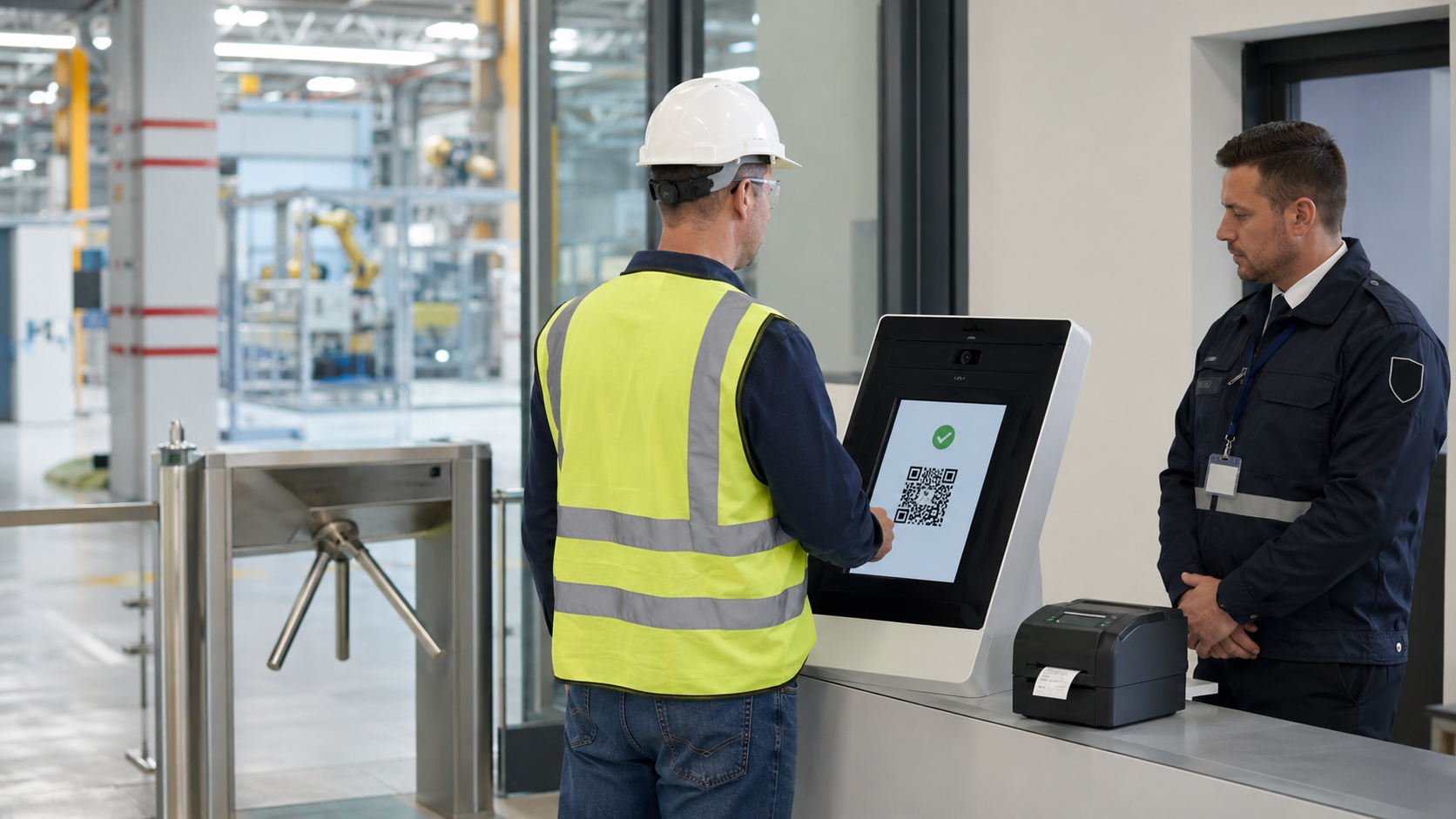
Secure visitor check-in begins with proper identity verification. Visitor security software allows organizations to verify visitors through digital forms, QR codes, OTP verification, ID proof upload, visitor photo capture and host confirmation.
Visitors can pre-register before arrival or complete check-in at the gate or reception. The system can collect mandatory details and notify the host immediately. Once the host approves, the visitor can receive a digital pass or printed badge.
For high-security organizations, AI visitor systems can add another layer of protection through face matching, repeat visitor recognition and watchlist alerts. If a blocked visitor or suspicious entry attempt is detected, the system can alert the security team instantly.
This creates a stronger and more reliable entry process than manual registration.
QR Visitor Check-In and Touchless Entry
QR visitor check-in is one of the most effective ways to make visitor entry faster and more secure. Instead of writing details in a register, visitors can scan a QR code using their own mobile phone.
They can enter details, verify OTP, accept policies and submit the visit request digitally. This reduces queue time, improves hygiene and avoids manual data entry errors.
Touchless visitor check-in is useful for offices, factories, hospitals, schools, warehouses, malls, events, residential buildings and commercial properties. It gives visitors a modern experience while helping security teams maintain accurate digital records.
For organizations with high visitor traffic, QR check-in can significantly reduce reception workload and improve gate-level efficiency.
Host Approval and Real-Time Visitor Alerts
A visitor should not enter a workplace only because they wrote a name in a register. Entry should be approved by the right person.
Visitor security software enables real-time host approval. When a visitor checks in, the host receives an instant notification through mobile, email or dashboard. The host can approve or reject the visitor based on the purpose of the visit.
This prevents unauthorized visitors from entering without employee knowledge. It also creates a clear approval trail showing who approved the visitor and when approval was given.
Real-time alerts also help security teams identify pending visitors, rejected entries, long-stay visitors and visitors who have not checked out.
Access Control Integration for Restricted Areas
Visitor management becomes much stronger when connected with an access control system. Access control integration helps organizations provide temporary and limited access to approved visitors.
For example, a visitor may be allowed only to the reception area, meeting room, visitor zone or approved department. A contractor may be allowed only to a specific plant area. A vendor may be allowed only up to the gate or loading zone. After check-out, access can automatically expire.
This prevents unauthorized movement inside the premises and reduces dependency on manual supervision.
Visitor access control is especially important for IT companies, factories, warehouses, hospitals, research centers, financial institutions, schools and high-security commercial buildings.
Contractor Compliance Management
Contractors often create higher compliance risk than regular visitors because they may enter restricted or operational areas. They may work in production zones, electrical rooms, maintenance areas, construction sites, warehouses or utility sections.
A compliance management system can help manage contractor compliance with digital safety instructions, work permits, ID proof, insurance documents, training records, approval workflows and entry history.
Before entering the premises, contractors can be required to accept safety rules, upload required documents or complete a compliance checklist. The system stores all records digitally for future audits.
This is especially useful for manufacturing plants, construction sites, facility management companies, hospitals, logistics hubs and corporate campuses.
Vendor Verification and Digital Gate Pass System
Vendors and suppliers visit organizations for deliveries, maintenance, inspections, service support, meetings and material movement. Without a proper system, vendor entry can become difficult to track.
Visitor security software can manage vendor registration, vendor verification, host approval, vehicle details, delivery purpose, material details, gate pass generation and exit records.
A digital gate pass system helps security teams manage vendor entry more professionally. It reduces paperwork, improves accountability and creates a proper record of vendor movement.
Vendor compliance management is important for factories, warehouses, offices, hospitals, schools, malls, residential societies and commercial properties.
Audit-Ready Visitor Records
A major advantage of visitor security software is audit-ready record management. Every visitor entry can be stored with complete details including name, company, contact number, photo, ID proof, host, purpose, location, approval status, check-in time and check-out time.
During audits, investigations or management reviews, authorized users can quickly search and export records. This saves time and improves confidence during compliance reviews.
Audit-ready visitor records are useful for safety audits, security audits, facility audits, internal compliance reviews, data protection checks and incident investigations.
A strong compliance management system helps businesses prove that visitor entry was controlled, approved and properly documented.
Emergency Evacuation and Real-Time Visitor Tracking
During an emergency, organizations must know who is inside the building. Manual registers often fail because check-out details may not be updated correctly.
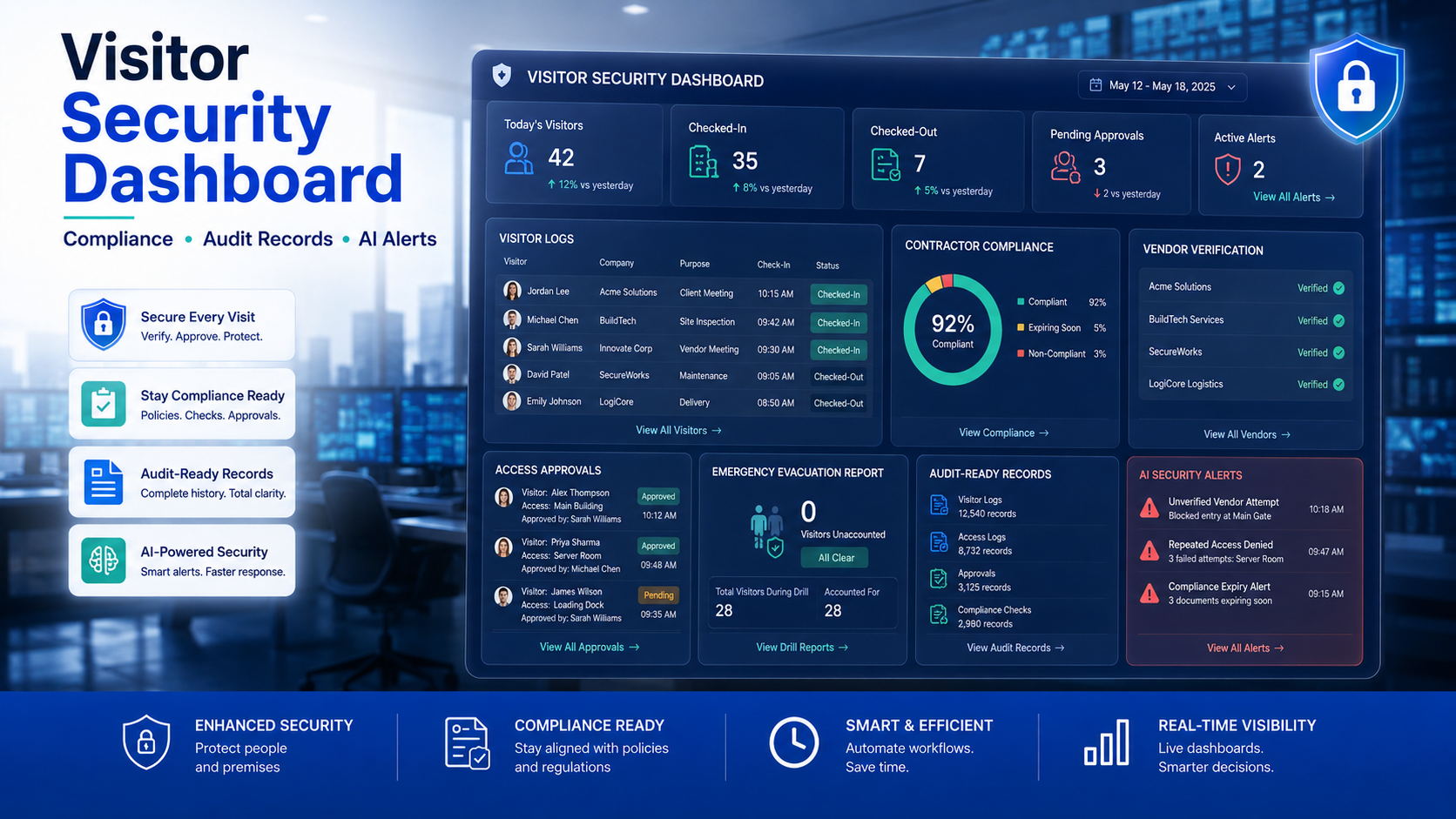
Visitor security software provides real-time visitor tracking and emergency evacuation reports. Security teams can quickly see active visitors, contractors, vendors and guests inside the premises.
Emergency reports may include visitor name, company, host, location, check-in time and approval status. This helps during fire drills, medical emergencies, security incidents, evacuation planning and disaster response.
For factories, hospitals, schools, offices and large facilities, real-time visitor visibility can make a major difference in emergency response.
Data Privacy and Secure Visitor Information
Visitor data can include names, mobile numbers, company details, photos, ID proof and meeting information. This data must be handled securely.
A digital compliance management system helps protect visitor data with role-based access, controlled permissions, secure storage, data retention settings and limited export rights.
This is much safer than paper registers where visitor information is visible to anyone standing near the gate or reception.
Secure visitor data management helps organizations build trust, reduce privacy risks and support internal compliance requirements.
AI and Analytics in Visitor Security
AI and analytics are making visitor security more intelligent. Modern visitor security software can analyze visitor patterns and detect unusual activity.
An AI visitor system can help identify repeat visitors, blocked visitors, rejected entries, long-stay visitors, high-frequency vendor visits and suspicious check-in behavior.
Analytics dashboards can show daily visitor counts, peak visitor hours, department-wise visits, location-wise entries, contractor activity, vendor movement, approval delays and security alerts.
This helps management improve staffing, strengthen security planning and monitor compliance more effectively.
Industry Use Cases of Visitor Security Software
Visitor security software and compliance management systems are useful across many industries.
Corporate offices use them for clients, interview candidates, vendors, consultants, auditors and business partners. Manufacturing units use them for contractors, suppliers, transporters, maintenance teams, auditors and plant visitors.
Warehouses use them for drivers, delivery teams, logistics vendors and loading visitors. Hospitals use them for patient visitors, attendants, medical representatives, vendors and service teams.
Schools and colleges use visitor security systems for parent verification, guest entry, vendor access and student safety. Residential societies use them for guest approval, delivery tracking, domestic staff management and vehicle entry.
Malls, events and holy places use digital visitor management for crowd visibility, VIP access, vendor control and security monitoring.
Benefits of Visitor Security Software
Visitor security software improves entry control, prevents unauthorized access, saves reception time, reduces manual errors, protects visitor data and provides real-time visibility.
It also supports compliance by maintaining accurate visitor records, approval history, safety acknowledgments, contractor documents, vendor details and audit reports.
For visitors, the process becomes faster and more professional. For employees, approval becomes easier. For security teams, access control becomes stronger. For management, reporting becomes more accurate.
A visitor security system helps organizations create a safer, smarter and more accountable workplace.
How to Choose the Right Visitor Security Software
The right visitor security software should be secure, easy to use, scalable and customizable. It should support digital visitor registration, QR check-in, touchless entry, ID verification, photo capture, host approval, badge printing, contractor compliance, vendor gate pass, access control integration, emergency reports and compliance dashboards.
It should also support role-based access, multi-location management, audit reports, data privacy controls and industry-specific workflows.
A factory may need safety compliance and contractor entry. A hospital may need visiting hour control. A school may need parent verification. A residential society may need resident approval. A corporate office may need NDA acceptance and meeting-based visitor access.
The best compliance management system is one that matches the real workflow of the organization.
Final Thoughts
Technology is playing a major role in improving visitor security and compliance. Manual visitor registers cannot meet the security, privacy and audit needs of modern organizations.
With visitor security software, businesses can manage secure check-in, identity verification, host approval, access control, contractor compliance, vendor verification, digital gate passes, emergency reports and audit-ready visitor records from one platform.
A compliance management system helps organizations follow safety rules, maintain proper records, protect visitor data and improve workplace accountability.
As security expectations continue to grow, digital visitor management will become a standard requirement for modern workplaces. Organizations that adopt visitor security software today will be better prepared for safer operations, stronger compliance and a more professional visitor experience.
Looking for reliable visitor security software and a compliance management system for your office, factory, school, hospital, warehouse, residential society, commercial building or multi-location business?
Choose a smart visitor management solution that helps you manage secure visitor check-in, access approval, contractor compliance, vendor verification, digital gate passes, emergency reports and audit-ready visitor records with confidence.