A modern visitor management system does much more than record guest names. This guide explains the key visitor management system features organizations should look for, including visitor access control software, digital visitor log system tools, pre-registration, approvals, QR and OTP entry, badge printing, reporting, and multi-location control.
Key Features to Look for in a Modern Visitor Management System
Managing visitors is no longer just a reception task. In modern offices, hospitals, schools, factories, warehouses, residential properties, and institutions, visitor movement directly affects security, compliance, front-desk efficiency, and the overall image of the organization. This is why companies across the world are replacing manual registers and paper slips with a modern visitor management platform.
A traditional visitor book may record names, but it does not give organizations the control, visibility, speed, and accountability they need today. It cannot verify visitors properly, track real-time entry and exit, notify hosts instantly, maintain clean records, or support security teams with reliable data. A digital system does all of that and more.
When businesses start comparing platforms, one question becomes very important: what visitor management system features actually matter? Many software providers talk about digital check-in, but not every system is designed for real operational needs. A modern platform should not only capture visitor details. It should help organizations control access, improve visitor experience, reduce manual work, and create a strong security process from entry to exit.
In this blog, we explain the most important visitor management system features, why they matter, and how the right visitor access control software and visitor log system can help organizations of every size operate more securely and professionally.
Why Features Matter in a Visitor Management System
A visitor management system is often the first layer of control at a building or facility. Every day, organizations deal with clients, vendors, candidates, contractors, service engineers, consultants, delivery personnel, auditors, and many other external visitors. In some industries, even parents, patients’ relatives, temporary workers, and third-party staff must be managed carefully.
If the system is too basic, staff still end up doing manual work. If the process is slow, queues build up at reception. If records are incomplete, security becomes weak. If entry approval is not handled properly, unauthorized access becomes more likely. That is why the choice of features is critical.
The best solution is one that supports both security and convenience. It should be simple for visitors, useful for reception teams, reliable for security staff, and valuable for management.
1. Fast Digital Visitor Check-In
One of the first features to look for is a smooth and fast digital check-in process. A modern system should allow visitors to register quickly without depending on handwritten forms or paper registers.
Digital check-in reduces waiting time, removes manual entry mistakes, and creates an instant digital record. This is especially useful for busy offices, hospitals, schools, and corporate campuses where multiple visitors may arrive during the same period.
An effective visitor check-in feature should support:
- Self-registration or receptionist-assisted registration
- Quick form filling
- Capture of basic visitor details
- Purpose of visit
- Host name or department selection
- Entry time recording
This is the foundation of a good visitor log system, because every visitor interaction begins with correct and structured data capture.
2. Visitor Pre-Registration and Pre-Approval
A truly modern visitor management platform should support pre-registration. This means employees or administrators can register expected guests before they arrive.
Pre-registration helps organizations prepare for meetings, vendor visits, interview schedules, training sessions, or official appointments. It improves security because expected visitors are already in the system, and it improves experience because entry becomes faster.
Pre-registration is particularly important in:
- Corporate offices with regular client meetings
- Hospitals receiving vendor representatives
- Schools expecting parents or guests
- Industrial sites where contractors need approval
- Residential complexes managing planned guest visits
When combined with pre-approval, the system becomes even stronger. Only approved visitors should be allowed to proceed through the entry workflow.
3. OTP-Based Visitor Verification
Security is one of the main reasons organizations invest in visitor software, so verification features are essential. OTP-based verification is one of the strongest features to include in a modern system.
With OTP verification, a visitor receives a one-time password on their mobile number or through the host approval flow. This adds an extra level of validation and helps reduce fake or incomplete visitor entries.
OTP verification is useful because it:
- Confirms that contact details are valid
- Adds an extra layer of visitor identity confirmation
- Helps reduce misuse of visitor entry systems
- Improves trust in the accuracy of entry records
For organizations that want better control at entry points, OTP verification is a valuable feature within visitor access control software.
4. QR Code-Based Entry and Exit
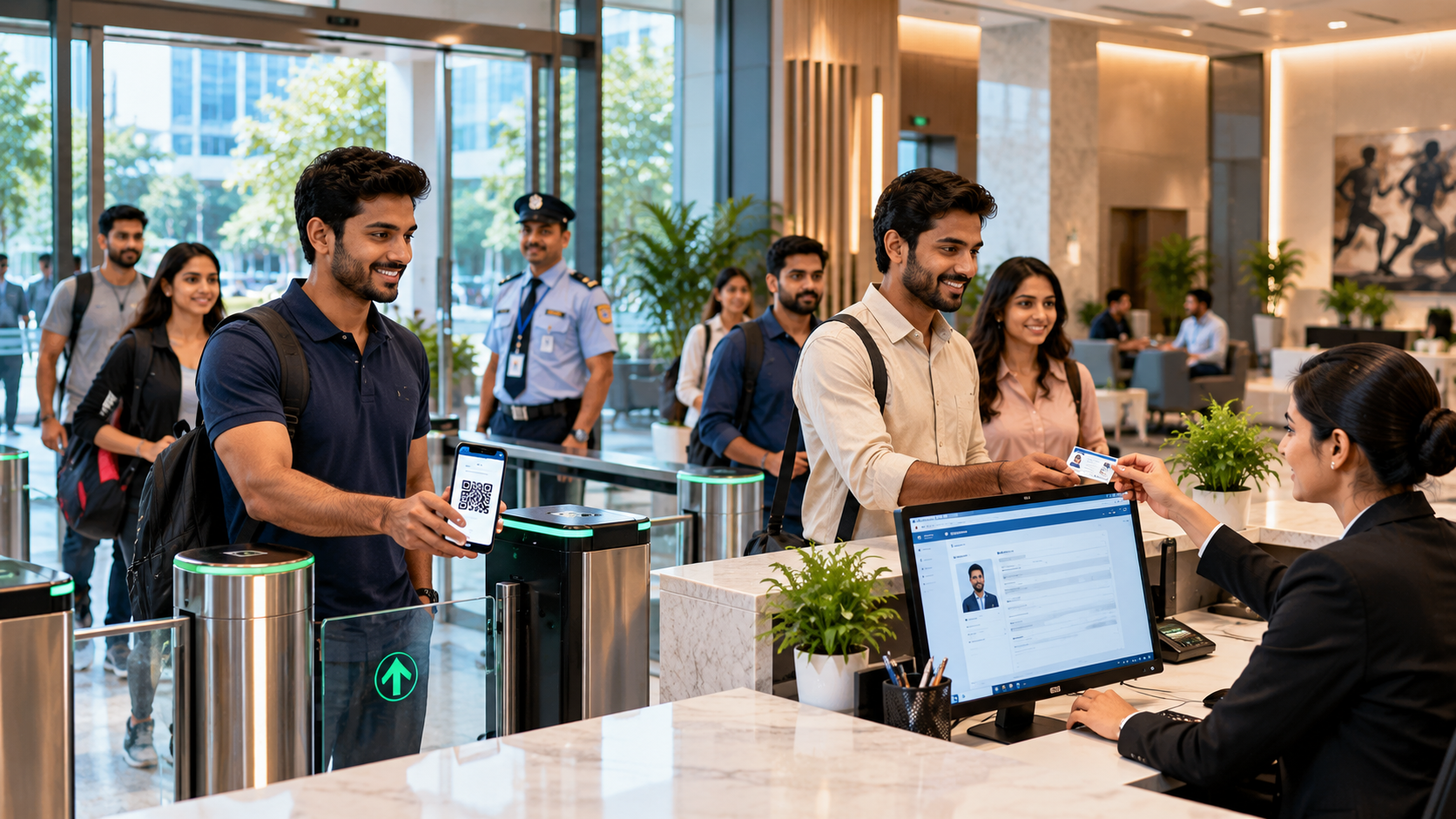
QR code functionality is one of the most practical visitor management system features for modern organizations. It makes entry and exit faster, more secure, and easier to track.
When a visitor is pre-registered or approved, the system can generate a QR code. At the time of arrival, the visitor scans the code to check in. At exit, the same or a linked code can be scanned again to mark departure.
Benefits of QR-based entry include:
- Faster visitor processing
- Reduced manual handling at reception
- Better accuracy in check-in and check-out records
- Contactless and professional visitor experience
- Easy validation for security staff
QR-based entry is especially useful in office buildings, tech parks, hospitals, manufacturing units, event venues, and multi-building campuses.
5. Check-In and Check-Out Tracking
A visitor entry record is incomplete without exit tracking. Many organizations focus only on who came in, but a strong visitor log system must also capture when the visitor left.
Check-in and check-out tracking helps with:
- Accurate visitor movement history
- Real-time occupancy visibility
- Emergency response readiness
- Security audits
- Preventing open or incomplete visitor records
In modern visitor software, exit tracking can be handled through reception, self-checkout, QR scanning, or security desk confirmation. This gives management a complete picture of visitor presence.
6. Badge Printing and Pass Generation
A professional visitor badge is both a branding tool and a security tool. Modern systems should support instant badge or visitor pass generation after check-in or approval.
A good badge printing feature should allow the pass to include:
- Visitor name
- Company name
- Host name
- Visit purpose
- Date and time
- QR code or unique visitor ID
- Photo, if needed
Badge printing helps organizations quickly identify authorized visitors and restrict access visually. It also creates a more professional welcome experience.
For large facilities, hospitals, factories, and corporate offices, this is a must-have feature rather than an optional one.
7. Host Notification and Approval Workflow
A modern visitor system should automatically inform the host when a guest arrives. This prevents reception teams from making repeated phone calls and helps reduce delays.
Host notification can happen through:
- SMS
- App notification
- Internal dashboard alert
Approval workflows are equally important. Some visitors may require instant entry, while others may need approval from a specific host, department, or admin before access is granted.
This feature improves both control and convenience. It ensures visitors are not entering without visibility, while also making the process smoother for authorized guests.
8. Real-Time Visitor Dashboard
Real-time visibility is one of the biggest benefits of modern visitor software. Administrators and security teams should be able to see:
- Who is currently inside
- Who checked in today
- Pending approvals
- Overstayed visitors
- Frequent visitors
- Entry and exit summaries
A live dashboard helps decision-makers act quickly and improves daily control. In emergency situations, this feature becomes extremely valuable because it can provide an instant list of visitors on-site.
This is where a digital platform clearly outperforms a manual register. A paper log may store information, but it cannot provide real-time intelligence.
9. Visitor Access Control Software Integration
A visitor system becomes much more powerful when it works as true visitor access control software. This means it can support or integrate with access restrictions for doors, gates, zones, or floors based on visitor approval and visit type.
This feature is important for:
- Corporate offices with restricted floors
- Factories with limited production access
- Warehouses with controlled entry zones
- Hospitals with sensitive departments
- Institutions with secure areas
Visitor access control ensures that entry is not just recorded, but properly governed. This strengthens security and helps organizations move beyond simple digital logging into real operational control.
10. Multi-Location and Scalable Setup
Many organizations operate across multiple branches, offices, campuses, plants, or properties. A modern visitor management system should support centralized control across locations.
A scalable platform allows organizations to:
- Manage visitors across multiple branches
- Standardize visitor policies
- View location-wise reports
- Control users by role and location
- Expand as the organization grows
This is very important for businesses that want one platform for offices, hospitals, schools, factories, and residential properties rather than separate tools for each location.
11. Searchable Visitor Log System and Reports
A digital visitor log system should do more than store names. It should provide searchable records and actionable reports.
Useful reporting capabilities include:
- Date-wise visitor reports
- Host-wise visitor reports
- Department-wise visits
- Frequent visitor tracking
- Pending checkout records
- Location-wise analysis
- Visitor history lookup
Good reports help organizations improve planning, security, and internal accountability. They also save time during audits, investigations, or management reviews.
12. Custom Visitor Forms and Industry Flexibility
Not all visitor workflows are the same. A school may need guardian details. A hospital may need patient relation data. A factory may need contractor and safety information. A corporate office may need meeting details and approval status.
This is why flexibility matters. The system should allow customized visitor forms and workflows based on industry needs.
A strong solution should be adaptable for:
- Offices
- Hospitals
- Schools and colleges
- Factories and industrial units
- Warehouses and logistics sites
- Residential societies
- Government and institutional buildings
A platform that works across industries is much more valuable in the long term.
13. Strong User Roles and Admin Control
Visitor software is used by different teams, including reception, security, HR, facility managers, and administrators. The system should support role-based access so each user only sees what they need.
This helps organizations:
- Protect sensitive data
- Control permissions
- Reduce errors
- Improve accountability
A modern platform should allow admin-level configuration without making daily operations difficult for front-desk staff.
14. Professional Visitor Experience
A good system is not only about security. It also shapes the visitor’s first impression. A well-managed entry process makes the organization look modern, organized, and trustworthy.
Features like quick check-in, QR-based access, instant host alerts, badge printing, and smooth approval flows create a better experience for guests. This matters especially for client-facing businesses and institutions where professionalism is part of the brand.
Why N&T Software Visitor Management System Stands Out
When organizations look for advanced visitor management system features, they need a platform that combines security, ease of use, and scalability. A strong solution should support:
- Digital visitor check-in and check-out
- OTP-based entry verification
- QR code scan-based entry and exit
- Visitor pass and badge printing
- Real-time visitor logs
- Approval workflows
- Host notifications
- Access-oriented visitor controls
- Multi-location setup
- Industry-specific flexibility
N&T Software’s visitor management approach is built for real operational needs across offices, hospitals, schools, factories, residential properties, and many other sectors. Instead of offering only a basic logbook replacement, it focuses on creating a complete visitor handling system that improves entry control, reporting, accountability, and visitor experience.
Final Thoughts
Choosing the right visitor platform is not about selecting the one with the most features on paper. It is about choosing the one with the right features for real daily use. A modern system should make visitor entry faster, more secure, easier to manage, and more professional.
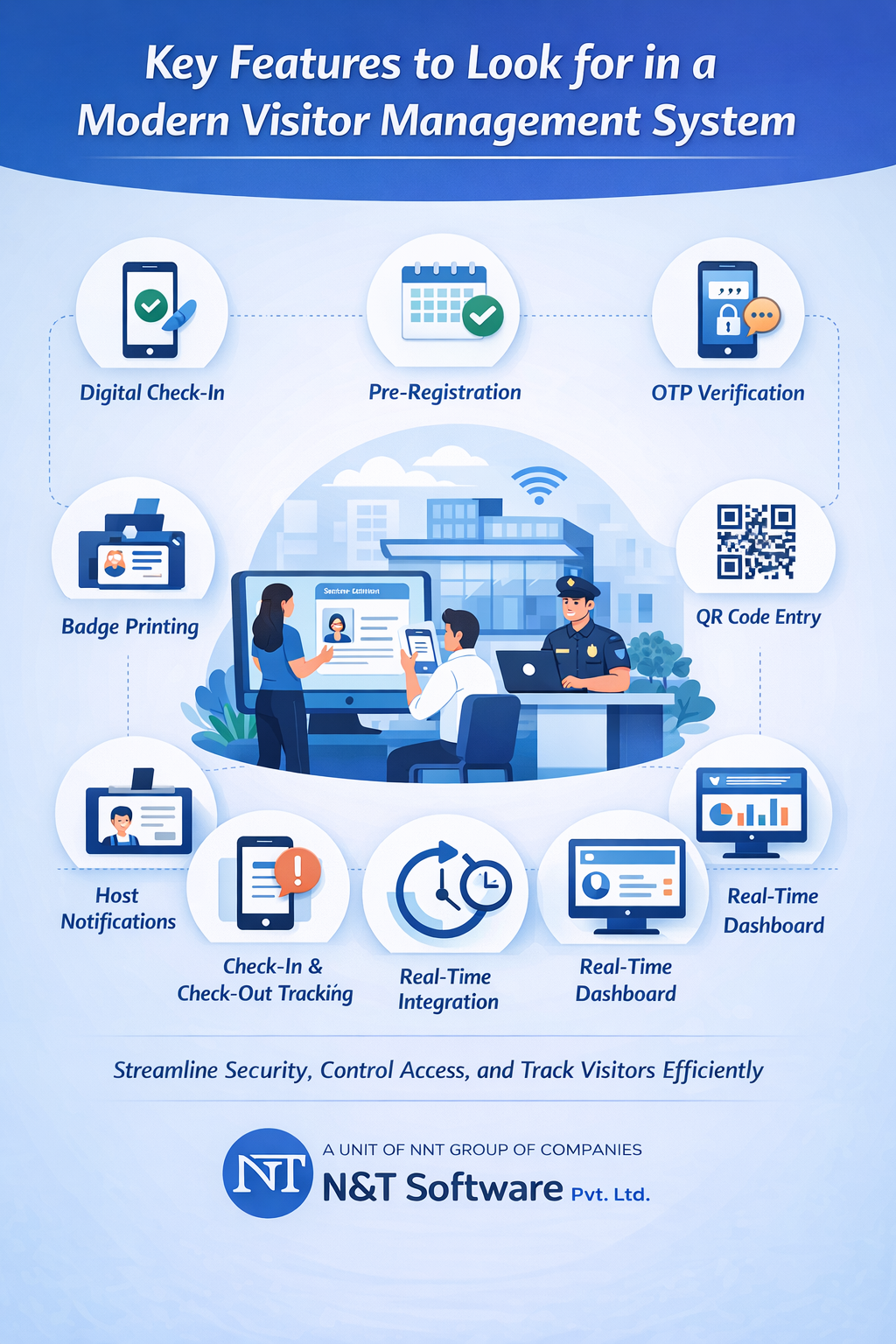
The most valuable visitor management system features are the ones that support the full visitor journey: pre-registration, verification, approvals, QR entry, check-in and check-out tracking, badge printing, real-time dashboards, searchable visitor logs, and access control support.
If your organization still depends on paper registers or fragmented entry processes, upgrading to a digital platform can significantly improve security, visibility, and efficiency. And if you want a future-ready system, make sure you choose software that can scale across industries, locations, and operational needs.
A modern visitor system is no longer a nice-to-have. It is now a key part of workplace security, operational discipline, and professional guest management.
FAQ
What are the most important visitor management system features?
The most important features include digital check-in, pre-registration, OTP verification, QR code entry, host notification, approval workflows, badge printing, check-in/check-out tracking, real-time dashboards, and reporting.
What is visitor access control software?
Visitor access control software helps organizations manage who can enter, when they can enter, and what level of access they should receive. It adds control beyond simple visitor logging.
Why is a digital visitor log system better than a paper register?
A digital visitor log system is faster, more accurate, searchable, report-friendly, and far more secure than a manual register. It also supports real-time tracking and better compliance management.
Which industries need visitor management software?
Almost every industry can benefit, including offices, hospitals, schools, colleges, factories, warehouses, residential societies, government buildings, and commercial properties.
Can a modern visitor management system support QR and OTP entry?
Yes. Advanced systems support QR code-based entry and exit as well as OTP-based visitor verification for stronger control and faster processing.
Looking for a modern visitor management system for your office, hospital, school, factory, or property? Visit visitormanagmentsoftware.com to explore a smarter, faster, and more secure visitor management solution by N&T Software.