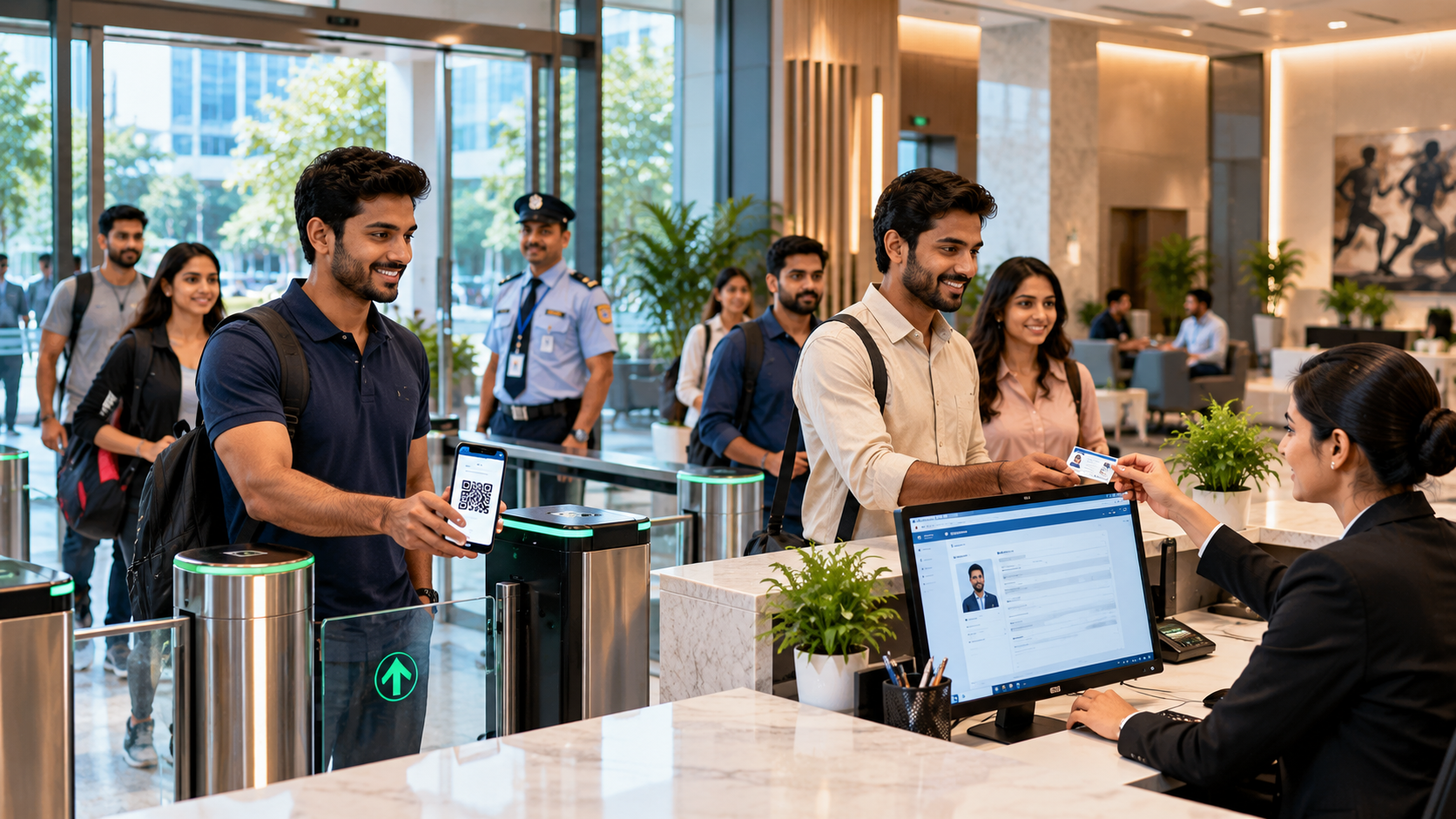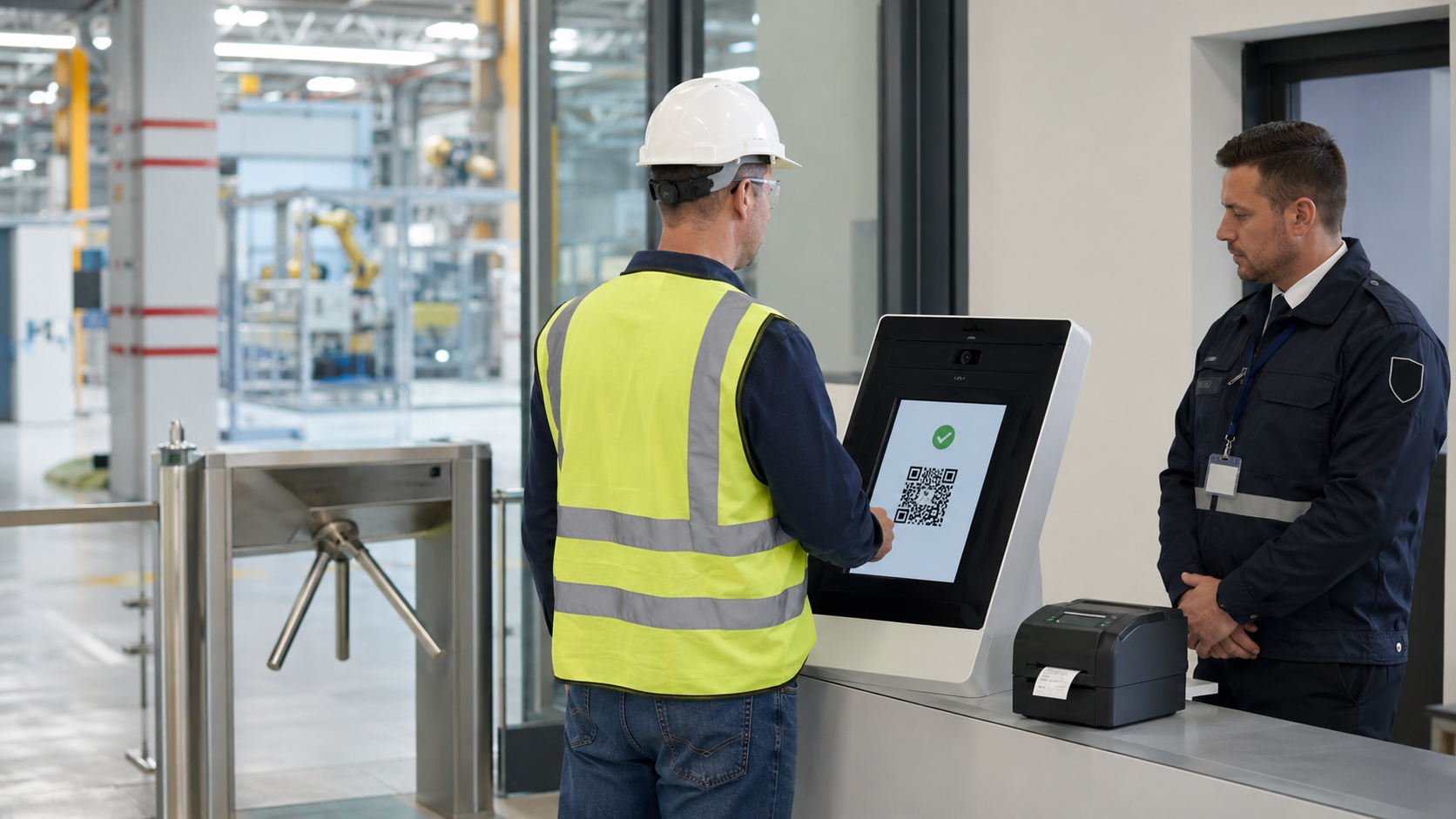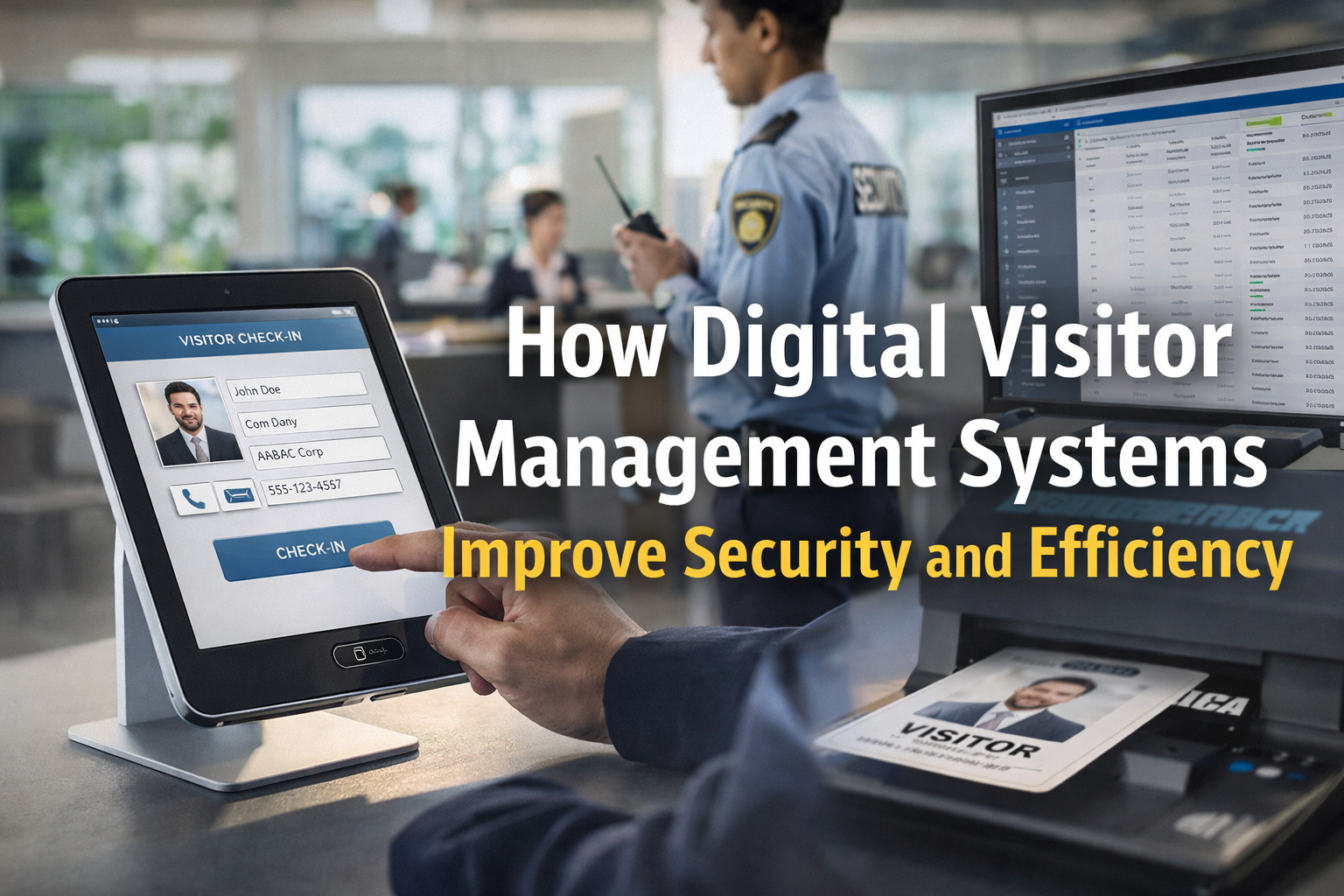
A digital visitor management system helps organizations replace manual registers with secure, fast, and automated visitor check-in processes. This blog explains how smart visitor software improves security, efficiency, compliance, and visitor experience across workplaces and facilities.
How Digital Visitor Management Systems Improve Security and Efficiency
Visitor entry is one of the first points of contact between an organization and the outside world. Whether it is an office, school, hospital, factory, warehouse, residential complex, or commercial building, the way visitors are received and recorded directly affects security, daily operations, and overall experience.
For many organizations, visitor handling still depends on paper registers, manual approvals, phone calls to internal staff, and security guards writing names in notebooks. At first glance, that process may seem simple. In reality, it creates gaps that affect both safety and efficiency. Handwritten logs are often incomplete, visitor information can be hard to read, records are difficult to retrieve, and there is little control over who entered, why they came, whom they met, and when they left.
This is where a digital visitor management system changes everything.
A modern digital visitor management system replaces outdated manual processes with an intelligent and organized way to register, verify, approve, track, and monitor visitors. With automated visitor check-in and smart visitor software, businesses and institutions gain stronger access control, faster reception processes, better recordkeeping, and a more professional visitor experience.
In this blog, we will look at how digital visitor systems improve both security and efficiency, why organizations are moving away from paper logbooks, and what features make a visitor management platform valuable in real-world operations.
What Is a Digital Visitor Management System?
A digital visitor management system is software that helps organizations manage visitor entry and exit using a digital process instead of paper-based registration. Visitors can check in through a tablet, kiosk, desktop, mobile device, or pre-registration link. Their information is stored securely, notifications can be sent instantly to the host, and the system creates a searchable record of every visit.
Depending on the setup, the system may include features such as:
- Visitor pre-registration
- ID capture or document scanning
- Photo capture
- Badge printing
- Host notifications
- Approval workflows
- Check-in and check-out tracking
- Blacklist or watchlist screening
- Visitor history reports
- Multi-location access management
The main goal is simple: make visitor handling safer, faster, and easier to manage.
Why Manual Visitor Entry No Longer Works
Manual entry methods create several operational and security problems that many organizations continue to underestimate.
1. Incomplete or inaccurate records
Visitors may write only part of their name, skip important information, or enter unreadable details. Security teams then work with records that are not reliable.
2. No real-time visibility
With a paper register, management cannot instantly know who is inside the building at a given time. During emergencies, this creates serious risk.
3. Slow check-in process
Reception staff or guards often need to ask repeated questions, call employees for approval, write entries manually, and guide visitors without system support.
4. Weak security controls
A notebook cannot verify identity, flag suspicious persons, or block unauthorized visitors automatically.
5. Poor data retrieval
If a manager wants to know who visited last week, last month, or during a specific incident, someone must manually search through pages of records.
6. Unprofessional visitor experience
A crowded reception desk and manual sign-in process leave a poor first impression, especially for clients, vendors, and corporate guests.
As visitor volumes grow and compliance expectations increase, manual systems become a liability rather than a solution.
How a Digital Visitor Management System Improves Security
Security is one of the biggest reasons organizations adopt visitor software. A smart digital system gives better visibility, better control, and better accountability.
1. Accurate visitor identification
A digital visitor management system captures visitor details in a structured format. Instead of depending on handwritten entries, organizations can collect standard information such as name, phone number, company name, purpose of visit, host name, time of entry, and photo.
Some systems also support ID verification or document capture, which adds an extra layer of trust. This helps security personnel know exactly who entered the premises.
2. Real-time visitor tracking
A digital system shows who is currently inside the building, who has checked out, who is waiting, and who was expected in advance. This real-time visibility is critical for security teams.
If an issue happens, staff can quickly review current visitor status instead of checking a paper log. During fire drills, emergencies, or evacuation scenarios, this kind of visibility becomes extremely valuable.
3. Controlled access through approval workflows
Not every visitor should be allowed entry immediately. Smart visitor software can apply approval-based access rules. For example:
- Guests may need host approval before entry
- Vendors may require department authorization
- Contractors may require document verification
- Delivery personnel may be restricted to certain zones
This structured workflow prevents unauthorized movement and makes access more disciplined.
4. Photo capture and badge printing
Photo capture allows the reception team to record the actual identity of the visitor. Badge printing helps create visible visitor identification, which improves on-site monitoring.
When security or staff can instantly identify who is a visitor and where they are authorized to go, it becomes easier to reduce unauthorized access and confusion.
5. Blacklist and watchlist screening
A strong digital visitor management system can prevent entry for blocked individuals. If someone is blacklisted due to a previous incident, unpaid vendor issue, compliance violation, or security concern, the system can alert staff immediately.
That kind of automated screening is not possible with a manual register unless staff remember names from memory.
6. Complete audit trail
Digital systems create a reliable audit trail. Every check-in, approval, check-out, badge issue, and activity record is stored with timestamps. This is useful for internal reviews, dispute resolution, and security investigations.
If there is a security incident, management can review exact entry data instead of relying on guesswork.
How Digital Visitor Systems Improve Efficiency
Security is important, but efficiency is where organizations see daily operational gains. A digital platform reduces delays, manual work, and dependency on people remembering every step.
1. Faster check-in with automation
Automated visitor check-in speeds up the reception process significantly. Visitors can enter their information quickly on a device, or they may be pre-registered before arrival. Once they arrive, the system can verify details, notify the host, and approve entry within seconds.
This reduces queues, saves reception time, and avoids unnecessary back-and-forth calls.
2. Reduced workload for front desk and security staff
Reception teams handle many tasks at once: greeting visitors, answering calls, directing guests, informing employees, maintaining records, and managing deliveries. A digital system automates many of these tasks.
Instead of repeatedly writing details or searching for records, staff can focus on visitor assistance and higher-value coordination.
3. Instant host notification
When a visitor arrives, the system can immediately notify the host through email, SMS, app alert, or internal dashboard. This removes the need for reception staff to keep calling departments manually.
Instant alerts reduce waiting time and make the overall process smoother.
4. Quick search and reporting
Need to find out who met a certain employee last Tuesday? Need a list of all vendor visitors this month? Need to see peak visitor hours?
With smart visitor software, reports are searchable and structured. Management can access information quickly instead of flipping through pages of paper entries.
5. Better queue and appointment handling
If the system supports scheduled visits or pre-approved appointments, reception becomes more organized. Expected visitors can be processed faster, while walk-ins can be routed through the correct approval process.
This improves reception flow and helps organizations manage high visitor volumes more professionally.
6. Standardized multi-location operations
For businesses with multiple branches or facilities, manual visitor handling often varies from location to location. A digital system creates standard rules and workflows across all sites.
That means the organization can enforce consistent visitor policies, reporting formats, and security levels everywhere.
Visitor Experience Matters More Than Many Businesses Realize
A visitor’s first impression starts at the entrance. If check-in is slow, unclear, and disorganized, it reflects poorly on the organization. Clients, job candidates, consultants, auditors, vendors, and partners all notice how they are received.
A digital visitor management system improves that experience by making the process:
- Faster
- More professional
- More organized
- Easier to understand
- Less dependent on paperwork
Pre-registration links, quick sign-in, clear badges, and timely host notifications all contribute to a smooth arrival experience. This is especially important in corporate offices, hospitals, institutions, and premium commercial spaces where professionalism matters.
Key Features That Make Visitor Software Effective
Not every solution offers the same value. A powerful system should combine security controls with operational convenience.
Visitor pre-registration
Hosts can register visitors before arrival, reducing check-in time and improving preparedness.
Automated visitor check-in
Visitors can complete registration through self-service devices or guided reception workflows.
ID and photo capture
Helps verify identity and maintain clear records.
Badge printing
Improves visibility and internal movement control.
Instant host alerts
Hosts know immediately when their visitors arrive.
Approval workflow
Entry can be routed based on role, location, purpose, or department.
Visitor history and reports
Management can review entries, exits, repeat visits, and trends.
Blacklist management
Blocks restricted individuals from entering.
Multi-branch support
Useful for enterprises operating across several locations.
Data security and centralized records
Digital storage makes retrieval easier and access more controlled than physical registers.
A strong smart visitor software platform is not just a digital logbook. It becomes part of the organization’s security and operations system.
Industries That Benefit the Most
A digital visitor management system is valuable across many sectors because almost every environment receives external people.
Corporate offices
For client meetings, vendor visits, interviews, and general guest access.
Schools and colleges
For parent visits, guest faculty, service personnel, and event entry management.
Hospitals and healthcare facilities
For patient attendants, vendors, support staff, and visitor timing control.
Factories and manufacturing units
For contractors, auditors, suppliers, transporters, and maintenance teams.
Warehouses and logistics centers
For driver entry, vendor visits, dispatch coordination, and operational control.
Residential societies and buildings
For guest entry, service personnel, deliveries, and daily monitoring.
Government and institutional facilities
For stronger logging, approvals, and accountability.
Each sector may have different workflows, but the core need remains the same: secure and efficient visitor handling.
Compliance, Accountability, and Record Management
Many organizations are now expected to maintain proper records of visitor movement, vendor access, and third-party presence. Even when compliance rules differ by industry, the need for traceable and retrievable visitor records continues to grow.
A digital system supports this by providing:
- Timestamped entry and exit logs
- Searchable visitor history
- Consistent data collection
- Reduced record tampering risk
- Better accountability across departments
When records are digital, management gains stronger control over access information and can respond more confidently during audits, incident reviews, or internal investigations.
Digital Visitor Systems Also Help During Emergencies
This is one of the most practical benefits and one that is often overlooked until an incident happens.
If there is an evacuation, fire alarm, emergency lockdown, or security threat, teams need to know who is inside the premises. A paper notebook cannot provide fast and reliable answers.
A digital visitor management system helps by showing:
- Current visitors on site
- Check-in and check-out status
- Host information
- Time of arrival
- Visitor category
This improves response coordination and reduces confusion in critical moments.
Cost Savings Beyond the Front Desk
Some organizations initially think visitor software is just an added expense. In reality, it often reduces hidden operational costs.
These savings can come from:
- Less time spent on manual entry
- Reduced front desk workload
- Faster visitor processing
- Fewer security lapses
- Better reporting without manual compilation
- Lower risk of missing records during incidents
Over time, the gains in efficiency, professionalism, and control can make the system far more valuable than the cost of maintaining outdated processes.
What to Look for When Choosing Smart Visitor Software
If you are evaluating solutions, focus on practical business needs instead of only basic registration features.
Look for software that offers:
- Easy visitor registration
- Automated visitor check-in
- Secure data handling
- Quick reporting
- Host alerts
- Approval workflow
- Badge support
- Multi-location scalability
- User-friendly interface
- Flexibility for different visitor categories
The right smart visitor software should fit the organization’s workflow, not force teams into a complicated process.
Why Businesses Are Replacing Manual Registers
Organizations are moving to digital systems because they now understand that visitor handling is not a minor administrative task. It directly affects security, reception efficiency, compliance readiness, and brand perception.
A notebook at the gate may look simple, but it creates blind spots. A digital visitor management system creates visibility.
A manual process may appear low-cost, but it consumes staff time daily. Automated visitor check-in reduces that waste.
A traditional visitor log may store names, but it does not provide control. Smart visitor software turns visitor records into actionable operational data.
This is why more offices, institutions, commercial sites, and industrial facilities are adopting digital visitor platforms as a standard part of modern operations.
Final Thoughts
A digital visitor management system is no longer just a nice upgrade for modern businesses. It is becoming an essential tool for organizations that want better control over visitor entry, improved workplace security, and smoother front-desk operations.
By replacing paper logbooks with automated visitor check-in and smart visitor software, organizations can strengthen access control, reduce delays, improve record accuracy, and create a better experience for every visitor who walks through the door.
The best systems do more than record names. They help businesses operate with confidence, professionalism, and accountability.
If your organization still relies on manual visitor registration, now is the right time to rethink that process. A smart digital system can transform the entrance from a weak point into a well-managed and secure gateway.
Suggested FAQ Section
What is a digital visitor management system?
A digital visitor management system is software that helps organizations register, approve, track, and manage visitors using a digital process instead of manual paper registers.
How does automated visitor check-in work?
Automated visitor check-in allows visitors to register through a kiosk, tablet, desktop, or mobile workflow. The system records visitor details, may notify the host instantly, and stores the visit history digitally.
How does visitor software improve security?
It improves security by maintaining accurate visitor records, enabling approval workflows, tracking real-time presence, capturing photos or IDs, and creating a complete audit trail.
Is smart visitor software useful for small businesses?
Yes. Small businesses also benefit from faster reception, better visitor records, improved professionalism, and reduced dependence on manual paperwork.
Which industries can use a digital visitor management system?
Corporate offices, schools, hospitals, factories, warehouses, residential buildings, institutions, and commercial facilities can all benefit from digital visitor management.
Looking for a Smart Visitor Management Solution? N&T Software provides a secure and easy-to-use digital visitor management system that helps organizations improve security, automate visitor check-in, and manage visitor records efficiently. Contact our team to explore the right solution for your office, school, hospital, factory, or facility. Contact Us Today